Global buyers entering 2026 need more than attractive prices when selecting Aluminium Takeaway Containers. They need dependable performance, clear specifications, and evidence behind every sustainability claim. A container may look sturdy on a product page, yet fail during stacking, transport, or hot-food service. Small details matter, including lid fit, wall thickness, rim strength, and resistance to oil.
Fiona Solomon, former Chief Executive of the Aluminium Stewardship Initiative, has said, “Aluminium’s value depends on responsible production and effective recycling.” This principle gives buyers a useful starting point. Aluminium can protect food, tolerate high temperatures, and enter established recycling systems in many markets. However, recycling access differs between cities and countries. The material itself is not a complete sustainability answer.
This guide examines the 2026 options through a practical global purchasing lens. It considers gauge, shape, capacity, sealing performance, pallet efficiency, food-contact documentation, and supplier consistency. It also asks uncomfortable questions. Is the container genuinely recyclable where it will be used? Are production claims independently supported? Does a lower unit price create more waste through leakage or damage?
Some decisions remain imperfect. No single format suits every cuisine, delivery route, or local recovery system. Buyers should test samples with real meals, not only empty containers. Steam, sauces, and rough handling reveal weaknesses quickly. Reliable sourcing also requires checking certificates, batch controls, and communication standards before placing large orders. The best choice balances protection, compliance, cost, and realistic end-of-life options.
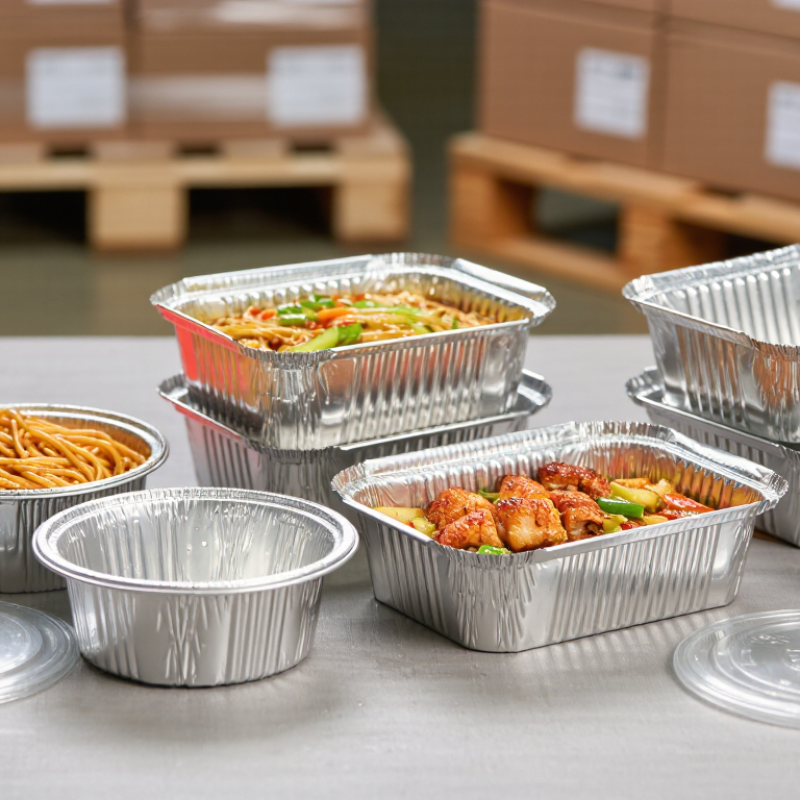
2026 Best Aluminium Takeaway Containers for Global Buyers?
Aluminium container performance starts with foil gauge, alloy, shape, and forming quality. Commercial stock commonly ranges from 40 to 150 micrometres. Thicker foil resists dents and supports heavier meals. Thinner foil reduces material use but may wrinkle during transport. A 3003 alloy offers good strength and corrosion resistance. Alloy 8011 forms easily and suits many standard food containers. Some suppliers also use 8006 for deeper drawing and better rigidity. These choices are practical, not universal. Regional specifications still differ.
Round containers suit soups, rice dishes, and single portions. Rectangular trays provide better shelf efficiency and fit roasted meals. Compartment designs separate sauces, vegetables, and proteins. Smooth-wall containers look cleaner, while crimped rims improve lid engagement. According to the International Aluminium Institute, recycling aluminium can save about 95% of the energy required for primary production. European Aluminium reports that packaging aluminium can return to recycling systems repeatedly, when collection and sorting work properly. That condition matters. Real recovery rates vary by market.
Tips: Ask for foil thickness in micrometres, not only “heavy duty.” Request alloy certificates, food-contact documentation, and compression tests. Check whether lids match the rim profile. Test filled containers after stacking, reheating, and delivery vibration. I once underestimated corner deformation in a deep tray. The sample looked excellent, but the packed load failed. A second trial exposed the problem early. Also verify dimensions after forming, because stated measurements may describe the flange rather than usable capacity.
| Container Type | Typical Foil Thickness | Common Aluminium Alloys | Shape and Structure | Typical Uses | Main Advantages | Buyer Considerations |
|---|---|---|---|---|---|---|
| Light-Duty Takeaway Tray | 30–60 micrometres Approximately 1.2–2.4 mil | 8011, 1235 | Shallow rectangular or round tray; smooth or lightly ribbed walls | Cold foods, bakery items, snacks, side dishes and short-distance takeaway | Low material consumption, lightweight transport and economical unit cost | Best for lighter food loads; check resistance to bending, leakage and stacking pressure |
| Standard Meal Container | 60–100 micrometres Approximately 2.4–4.0 mil | 8011, 3003 | Rectangular, square or round container with formed sidewalls | Rice dishes, pasta, vegetables, meat portions and general takeaway meals | Balanced rigidity, heat resistance and cost efficiency | A practical general-purpose specification for foodservice distribution and retail packing |
| Heavy-Duty Catering Pan | 100–200 micrometres Approximately 4.0–8.0 mil | 3003, 8011 | Deep rectangular or oval pan with reinforced rim and sidewalls | Large portions, catering, roasting, food delivery and buffet service | Higher rigidity, improved load handling and better resistance to deformation | Higher aluminium usage increases weight and shipping cost; suitable for demanding handling |
| Deep-Drawing Container | 70–150 micrometres Approximately 2.8–6.0 mil | 3003, 8011 | Deep round or rectangular form with drawn walls and a rolled or reinforced rim | Soups, stews, sauces, ready meals and foods requiring greater volume | Good depth-to-width ratio and improved spill protection when correctly lidded | Alloy temper and forming capability are important to reduce cracking and wall thinning |
| Compartment Container | 60–120 micrometres Approximately 2.4–4.8 mil | 8011, 3003 | Two-, three- or four-compartment design with integrated dividing walls | Complete meals, lunch boxes, rice with side dishes and combination menus | Keeps different foods separated and supports portion control | Inspect divider strength, lid fit and sealing performance to reduce liquid transfer |
| Round Foil Container | 50–120 micrometres Approximately 2.0–4.8 mil | 8011, 3003 | Circular base with straight, tapered or flared sidewalls | Curries, soups, desserts, roasted foods and individual meals | Efficient heat distribution and convenient use with round paperboard or foil lids | Confirm diameter, usable volume and lid compatibility before ordering |
| Rectangular Foil Container | 50–150 micrometres Approximately 2.0–6.0 mil | 8011, 3003 | Rectangular or square base with straight or tapered corners | Lasagna, baked meals, takeaway rice, meat portions and catering trays | Good shelf and carton utilization; available in many capacity ranges | Corner geometry affects forming quality, stacking efficiency and usable internal volume |
| Ovenable Meal Tray | 80–200 micrometres Approximately 3.2–8.0 mil | 3003, 8011 | Rigid tray, often with a rolled rim and compatible heat-resistant lid | Frozen meals, ready-to-bake dishes, roasted products and reheating applications | Aluminium conducts heat efficiently and tolerates conventional oven temperatures | Provide clear heating instructions; do not assume microwave compatibility unless specifically designed and labelled |
| Bakery and Dessert Container | 30–80 micrometres Approximately 1.2–3.2 mil | 8011, 1235 | Shallow round, oval, rectangular or fluted container | Pies, cakes, tarts, pastries, puddings and individual desserts | Good heat transfer, attractive presentation and convenient single-use format | For acidic or salty fillings, verify food-contact suitability and storage requirements |
| Lidding Foil | 20–60 micrometres Approximately 0.8–2.4 mil | 8011, 1235 | Flat die-cut lid, peelable seal or foil cover with a rolled edge | Sealing trays, preventing spills and protecting food during transport | Low weight, strong barrier against light, oxygen and moisture, and easy die cutting | Check sealant coating, lid diameter, peel strength and compatibility with the container rim |
| Embossed or Ribbed Container | 50–120 micrometres Approximately 2.0–4.8 mil | 8011, 3003 | Embossed base or ribbed sidewalls for additional structural support | Takeaway meals, catering portions and products requiring improved stacking | Greater stiffness without a proportional increase in foil thickness | Embossing depth can affect internal capacity, lid fit and printing or labelling area |
| Recyclable Food Container | Depends on the selected container type | Commonly 8011 or 3003 | Any standard tray or pan shape; generally supplied without non-compatible attachments | Foodservice, takeaway, catering and household food storage | Aluminium can be recycled repeatedly when collection and sorting systems accept it | Remove excessive food residue where required; local recycling rules differ by country and municipality |
Technical note: Foil gauges, alloy designations, forming tempers, dimensions and food-contact requirements vary by manufacturer and market. The ranges shown are practical purchasing guidelines rather than universal specifications. Always confirm drawings, tolerances, lid fit, surface treatment and applicable food-contact regulations before mass production.
Update your browser to view this website correctly. Update my browser now