Best Stained Glass Hanging Panel Suppliers in China?

Choosing a reliable Stained Glass Hanging Panel supplier in China takes more than comparing catalog photos. A panel may look vivid online, yet arrive with uneven solder lines, muted colors, or a frame that does not suit its intended space. Small details matter. Ask how the glass is cut, joined, finished, and inspected. Request clear photographs of completed work, including close-ups of seams and hanging hardware.

This guide introduces practical ways to assess suppliers, from workshop experience and customization options to sample policies, packaging, and communication. Confirm which glass types and construction methods are available, and ask how colors may vary between samples and production. For larger orders, discuss inspection checkpoints and protective packing for fragile edges. Product claims and certificates should be checked directly; a polished website alone proves little. That sounds obvious, but it is easy to overlook when a design is appealing.

No supplier is right for every project. Some buyers value bespoke patterns, while others need consistent dimensions and predictable delivery. Compare written specifications, response times, and after-sales support before making a decision. A sample can reveal much, though not everything. This overview offers a grounded starting point for finding a Chinese supplier whose workmanship, service, and stated capabilities match your needs. Ask one more question when details remain unclear.
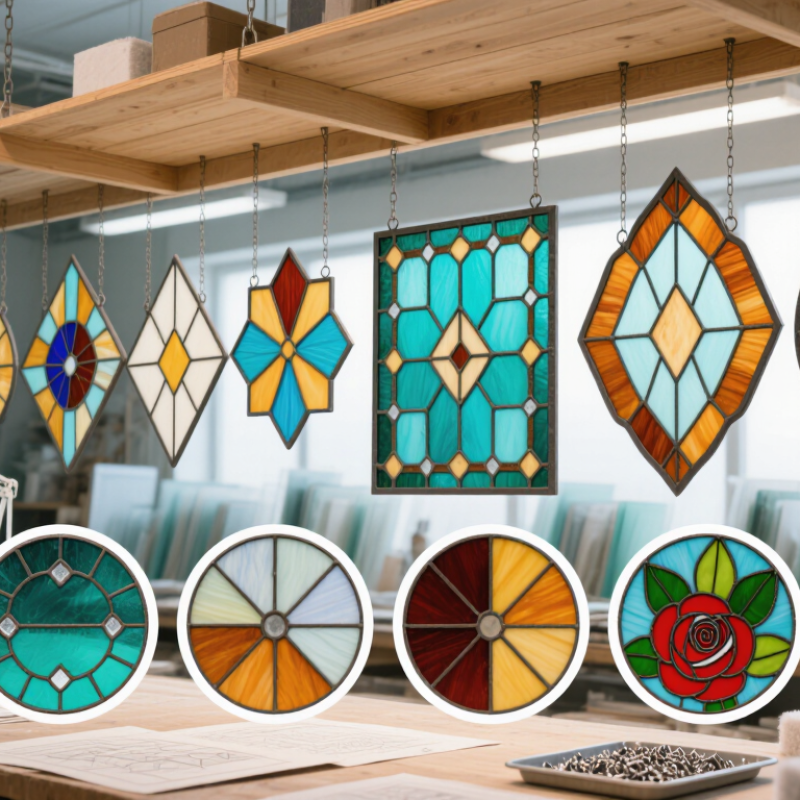
Best Stained Glass Hanging Panel Suppliers in China?

Defining Stained-Glass Hanging Panels: 3 Core Fabrication Methods

Stained-glass hanging panels are made mainly by lead came, copper foil, or kiln fusing. Each method leaves visible clues. Ask a supplier how the panel is assembled, supported, and checked before shipment.

Lead came holds cut glass inside H-shaped metal channels. The joints are cemented, creating a traditional grid with strong framing. Copper foil wraps each glass edge, then solder joins the pieces. This method suits small details and curved lines, but thin solder seams need careful inspection. Kiln-fused panels use heat to bond layered glass. They can look smooth and modern. Yet firing can shift pieces or alter colors, so request a sample made with the same glass and firing process.

Check the edges and hanging hardware. Look for even solder, secure came, and no sharp exposed glass. One detail is easy to miss: a decorative hanging panel is not automatically a replacement window. The U.S. Department of Energy’s Energy Saver guidance estimates that windows account for about 25–30% of residential heating and cooling energy use. That figure concerns household windows, not decorative panels; it is a useful reminder to confirm the panel’s intended use. No method is best in every case. Even a beautiful sample may hide weak support. Ask for panel dimensions, glass thickness, packing details, and photographs of completed work before comparing suppliers.

Best Stained Glass Hanging Panel Suppliers in China? — Defining Stained-Glass Hanging Panels: 3 Core Fabrication Methods

Compare fabrication methods and use the sourcing checklist to assess suppliers without relying on unverified rankings or claims.
Fabrication method How it is made Typical strengths Important considerations Useful supplier questions
Copper foil Each glass piece is edged with adhesive-backed copper foil. The foil seams are soldered together to form the panel. Suited to intricate designs, smaller pieces, and curved or detailed outlines. Narrow seams can preserve fine visual detail. Panel strength depends on design, soldering, glass choice, and any reinforcement. Large or heavy panels may need added support. Ask about edge finishing, reinforcement for the requested dimensions, hanging hardware, and whether a full-size drawing is available for approval.
Lead came Cut glass pieces are fitted into H-shaped lead came channels. The joints are soldered, and the perimeter is commonly finished with came or a frame. Well suited to traditional designs and panels with larger glass sections. Came creates visible lines that form part of the design. Panel rigidity depends on the panel’s size and shape, came profile, joint quality, and reinforcement. Lead is a soft metal, so support and handling matter. Ask for the came profile and material specification, reinforcement plan, perimeter detail, and recommended installation method.
Kiln-fused glass Compatible glass pieces are arranged and heated in a kiln until they bond or soften together. The finished panel may be slumped or mounted in a frame. Allows integrated color, texture, and layered glass effects. It can produce a panel without conventional copper-foil or lead-came seams. Glass compatibility and firing schedule affect the result. A fused panel may still require a frame or other support for hanging; confirm the design and load requirements. Ask how the glass is tested for compatibility, what firing and finishing steps are used, and how the panel will be supported and attached.

Mapping China’s Suppliers by OEM, Custom Design, and Export Capabilities

China’s stained-glass hanging-panel suppliers generally fall into three groups: OEM workshops, custom-design studios, and export-oriented manufacturers. OEM suppliers suit buyers with finished drawings, fixed dimensions, and repeat orders. Ask for a sample showing glass color, edge finish, solder lines, and hanging hardware. Details matter. A low unit price means little if panel sizes vary between batches.

Custom-design suppliers can develop patterns from sketches, color references, or room measurements. Their strength is flexibility, but confirm who approves the final design and how revisions affect lead time. Request a full-size drawing before production. Ask whether glass substitutions need your approval, since daylight can make a color look quite different from a catalog image.

Export-focused suppliers may offer stronger packing procedures, clearer shipping coordination, and experience preparing product documents. Still, “export-ready” is not proof of careful handling. Check how panels are separated, cushioned, and boxed; request photos of a packed sample or a drop-test method. A polished catalog can hide uneven workmanship.

I would compare several real samples, not just quotations, and record the small defects too. There is no perfect supplier, and my own checklist may miss a detail that matters to your market.

Evaluating Materials, Panel Dimensions, and Lead-Came or Copper-Foil Work

Choosing a hanging panel starts with the glass, not the pattern. Ask whether the pieces are mouth-blown, machine-made, or textured sheet glass; each changes color, weight, and light transmission. Request close-up photos against daylight, plus the actual finished dimensions and hanging hardware details. A 60-by-90-centimeter panel may look modest on a screen, yet feel heavy above a narrow window. Small matters. Ask for the panel’s weight and the recommended support points before ordering. The National Park Service’s Preservation Brief 33 notes that leaded glass needs regular inspection because came and supporting structures can deteriorate. That is relevant even for new work exposed to heat and vibration.

Lead-came and copper-foil construction suit different designs. Came creates visible lines and can support larger, structured panels; copper foil allows finer curves and intricate joints, but workmanship and solder quality matter. Ask suppliers how they reinforce wide sections and finish exposed edges. There is no universal best method. The U.S. Department of Energy estimates that windows account for about 25–30% of residential heating and cooling energy use; this figure concerns the window system, not a decorative hanging panel. If the panel sits near glazing, confirm clearance, ventilation, and safe suspension rather than assuming it improves insulation. One detail is easy to miss: confirm whether quoted dimensions include the frame. It can complicate installation.

Checking Quality Systems and Glass Specifications: ISO 9001 and ASTM C1036

Best Stained Glass Hanging Panel Suppliers in China?

Checking Quality Systems and Glass Specifications: ISO 9001 and ASTM C1036

When comparing suppliers, look beyond attractive photographs and polished sample panels. Ask whether the factory’s ISO 9001 certificate is current, names the correct manufacturing site, and covers relevant production activities. ISO 9001 describes a quality management system; it does not certify every panel as flawless. Request a sample inspection record, too. Does it show who checked the glass and when?

ASTM C1036 covers flat glass quality requirements, so ask how the supplier applies it to the glass used in each panel. Get the glass type, thickness, and relevant specification in writing. For a finished decorative panel, clarify which requirements apply to the glass itself and which checks address assembly, edge finish, or hanging hardware. Small details matter. A standard reference alone is not a complete product specification.

For a practical check, compare the approved sample with a production panel under steady light. Look for chips, scratches, uneven leading, and visible differences in color or texture. Ask for documented inspection criteria and a clear process for handling defects. I would not treat a tidy certificate folder as proof of consistent work; paperwork can be current while a particular batch still disappoints. It is worth asking for dated records tied to the order, then reviewing the panel before shipment.

Comparing Suppliers on 5 Metrics: MOQ, Lead Time, Tolerance, Warranty, and Cost

Best Stained Glass Hanging Panel Suppliers in China?

Compare suppliers using the same five metrics, not polished catalog photos. For MOQ, request the minimum for one design and the price break at 50 or 100 pieces. A small trial order is useful, but confirm whether custom colors or hardware trigger a higher minimum.

Ask for a written lead-time schedule separating sample approval, production, packing, and shipping. The glass may be ready while the hanging chain is not.

Tolerance needs a drawing. Specify panel width, height, thickness, and acceptable variation in millimeters, then ask how each measurement is checked before packing. Small details matter. Request photos of finished panels beside a ruler, plus packaging test records if available.

For warranty, clarify coverage for cracked glass, solder-joint failure, and transit damage. Ask about claim deadlines and required evidence; vague promises are hard to use.

Compare landed cost, not just factory price. Include protective packaging, samples, tooling, freight, and replacement terms.

UNCTAD’s Review of Maritime Transport 2024 reported that Shanghai–Europe spot container rates rose 256% between early December 2023 and late June 2024.

That figure is not a forecast for every route, but it shows why freight assumptions can distort a quote. Ask suppliers to state the quote’s validity period and shipping basis.

I would still treat any exceptionally low bid cautiously; low cost alone says little about breakage risk or consistent color matching.

Your browser is out of date!

Update your browser to view this website correctly. Update my browser now

×