China Top 10 Sliding Shower Door Manufacturers?
A Sliding Shower Door can look simple in a showroom, yet daily use depends on details: glass thickness, roller alignment, seals, and frame finish. A smooth glide matters. So does a door that stays steady after repeated opening and closing. For buyers comparing China-based manufacturers, the challenge is separating polished product photos from dependable production and after-sales support. Details matter. This guide introduces ten manufacturers for closer review, rather than presenting a fixed or independently certified ranking. Availability, product lines, and export experience can change, so current company information should be checked directly.
Each profile should help readers assess practical points: available sizes, tempered-glass options, hardware materials, finish choices, installation guidance, customization, and quality-control documentation. Ask for product drawings and clear specifications. Request recent project references where appropriate. A supplier’s response to technical questions can reveal as much as its catalogue, though one conversation is not proof of consistent performance. Compare sample quality, packaging, lead times, warranty terms, and spare-parts availability before making a decision. These checks are useful. Still, no checklist removes every risk; sample testing and written confirmation remain important, especially when dimensions or bathroom layouts differ. The “best” choice depends on the project, budget, target market, and service expectations. Use the list as a shortlist, then verify certifications, factory capabilities, and commercial terms with each company. Some details may be harder to confirm than expected. That is worth noting.
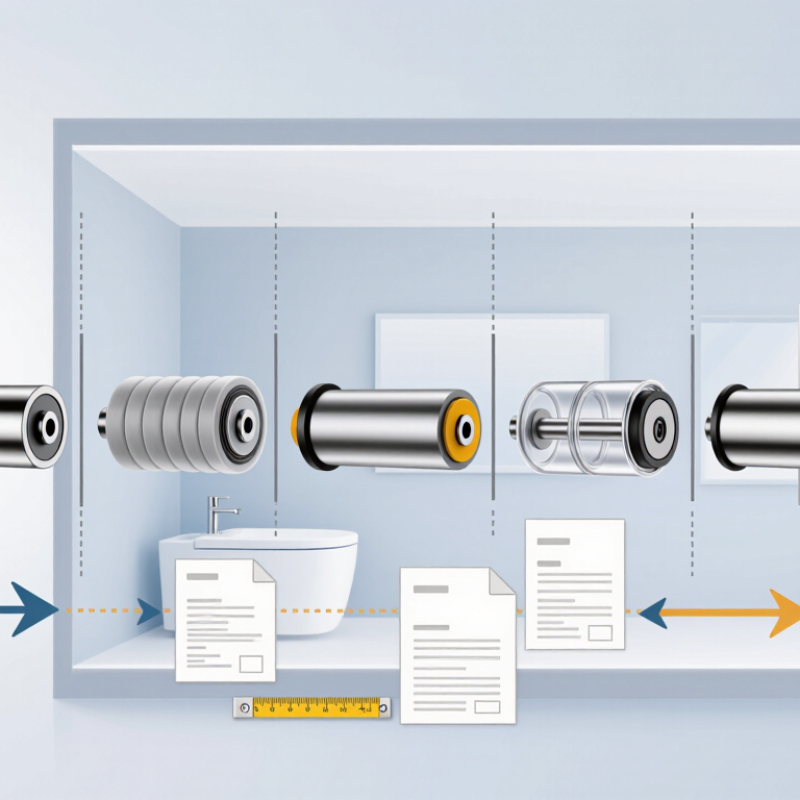
What Is a Sliding Shower Door and How Does It Work?
A sliding shower door is a glass panel system that opens sideways instead of swinging into the bathroom. Most designs use one fixed panel and one moving panel, though some have two moving panels. Small rollers at the top of the moving panel travel along a metal track. At the bottom, a guide helps keep the glass from shifting. Quiet, simple movement.
When you pull the handle, the rollers carry the panel past the fixed glass, leaving an opening for entry. Overlapping panels help limit splashes, while flexible seals along the edges reduce gaps. They do not make every shower fully watertight, especially if the floor slopes poorly or the seals have worn down. That detail is easy to overlook.
In practical use, the track needs occasional cleaning because soap residue and hair can make the door drag. A soft cloth and mild cleaner are usually enough; harsh scrubbing may damage some finishes. Installation also depends on the opening being measured accurately and the wall being suitable for secure mounting. A few millimeters matter. Even a well-made door can feel awkward if the opening is narrow, so check the entry space before choosing a layout.
How China’s Sliding Shower Door Industry Is Organized
China Top 10 Sliding Shower Door Manufacturers?
How China’s Sliding Shower Door Industry Is Organized
China’s sliding shower door industry works through linked supply layers, not a single factory model. Glass processors temper and finish panels; suppliers provide aluminum tracks, rollers, handles, and seals. Assemblers then combine these parts into standard or made-to-order enclosures. Coastal manufacturing belts, including Guangdong and Zhejiang, support dense networks of component makers and export-oriented factories. The boundaries are not perfectly neat.
Grand View Research estimated the global shower doors market at about US$3.65 billion in 2023 and projected continued growth through 2030. That figure covers shower doors broadly, not China-made sliding units alone. Still, it helps explain why Chinese manufacturers serve several routes: contract production, OEM or ODM orders, and direct export supply. Buyers often assess more than the glass. Track smoothness, replaceable rollers, packaging, and access to spare seals matter in daily use.
Tips: Ask for glass thickness, hardware material, and cycle-test details in writing. Request a sample of the roller assembly. A polished showroom door can hide a rough-running track. Even good suppliers may vary between batches, so check the final inspection plan.
Which 10 Manufacturers Lead China’s Sliding Shower Door Market?
Identifying ten leaders in China’s sliding shower door market requires more than comparing catalogues. Buyers should assess production capacity, export experience, glass-safety controls, hardware durability, and after-sales support. These details matter when a sliding panel must move smoothly on a damp bathroom floor.
China’s National Bureau of Statistics reported 724.33 million square metres of completed residential floor space in 2023, up 17.2% year on year, in its 2023 National Real Estate Development and Sales report. This signals a substantial housing-completion pipeline, but it is not direct shower-door sales data. A useful top-ten comparison should therefore separate verified company capabilities from market assumptions. No ranking is perfect. Check factory audits, test documentation, and project references before treating a supplier as a market leader.
Tips: Request a sample track and inspect its rollers, seals, and finish in person. Ask how glass thickness and installation tolerances are checked. A polished catalogue is helpful, but it cannot reveal whether a door still glides quietly after repeated use.
How Do These Manufacturers Differ in Products and Capabilities?
China’s sliding shower door manufacturers vary in more than price. Some specialize in framed systems with sturdy metal profiles, while others offer frameless designs with thicker tempered glass and minimal hardware. Product ranges may include bypass doors, corner enclosures, and custom-width panels.
Details matter.
Roller design, track clearance, and handle placement affect how smoothly a door works in a real bathroom.
Manufacturing capabilities also differ. One factory may provide precise glass cutting and consistent edge polishing; another may be stronger in surface finishes, packaging, or made-to-order dimensions. Ask how suppliers check glass thickness, alignment, and roller movement before shipment. Request drawings and sample measurements, not only catalog images.
Fit is everything.
Confirm the opening range, wall-plumb tolerance, and installation clearances for the specific project. Some specifications look impressive on paper but prove awkward during installation. Comparing production capacity, quality checks, customization limits, and technical support gives buyers a clearer view of which manufacturer can meet practical needs.
What Should Buyers Check When Evaluating a Manufacturer?
China Top 10 Sliding Shower Door Manufacturers?
What Should Buyers Check When Evaluating a Manufacturer?
A growing market makes careful checks more important, not less. Grand View Research estimated the global shower doors market at USD 3.68 billion in 2022, with projected growth through 2030. Market growth does not prove a factory can deliver consistent quality. Ask for glass safety test reports that match the exact product, thickness, and intended market. Check whether the factory controls glass processing, edge polishing, and final inspection in-house.
Look closely at the hardware, too. Request material specifications for rollers, hinges, and handles, plus corrosion-test results where available. Ask how the manufacturer checks door alignment, smooth movement, and water leakage on finished units. Packaging deserves attention: a well-made panel can still arrive chipped if corner protection is weak. Review inspection records from recent production batches, not only a showroom sample. One uncomfortable question: will the same checks continue when order volumes rise?
Tips: Request a sample, then compare its glass, finish, and hardware with the written specification. Confirm warranty exclusions and replacement-part availability. Keep measurements and test documents on file. A neat catalogue is useful, but it is not evidence.