China Top 10 Seating Chairs Suppliers for Global Buyers introduces manufacturers serving offices, hospitality venues, schools, healthcare spaces, and public interiors. China offers broad production capacity, but a large catalog does not guarantee dependable quality. Buyers must examine materials, production controls, testing records, customization ability, and after-sales communication.
Ergonomics specialist Alan Hedge often stated, “The best posture is the next posture.” This principle matters when evaluating seating chairs. A showroom chair may look impressive, yet its seat depth, lumbar support, foam density, and frame strength decide daily comfort. During supplier research, inspect welding points, stitching, surface finishes, caster movement, and packaging protection. Request samples when possible. Small details reveal factory discipline.
This selection focuses on suppliers with practical export experience, consistent manufacturing capabilities, and clearer communication for global buyers. It considers product range, project flexibility, quality management, certifications, lead times, and service responsiveness. Some suppliers may excel at large commercial orders, while others may perform better with custom designs or smaller batches. No ranking can replace direct verification. That is the uncomfortable part.
Factories change. Product lines change.
A supplier that performed well last year may need a new audit today. Buyers should confirm current certificates, production capacity, material specifications, and shipping terms before signing contracts. The goal is not merely to find attractive seating chairs. It is to find a manufacturer that can deliver safe, comfortable, repeatable products when deadlines, budgets, and customer expectations become real.
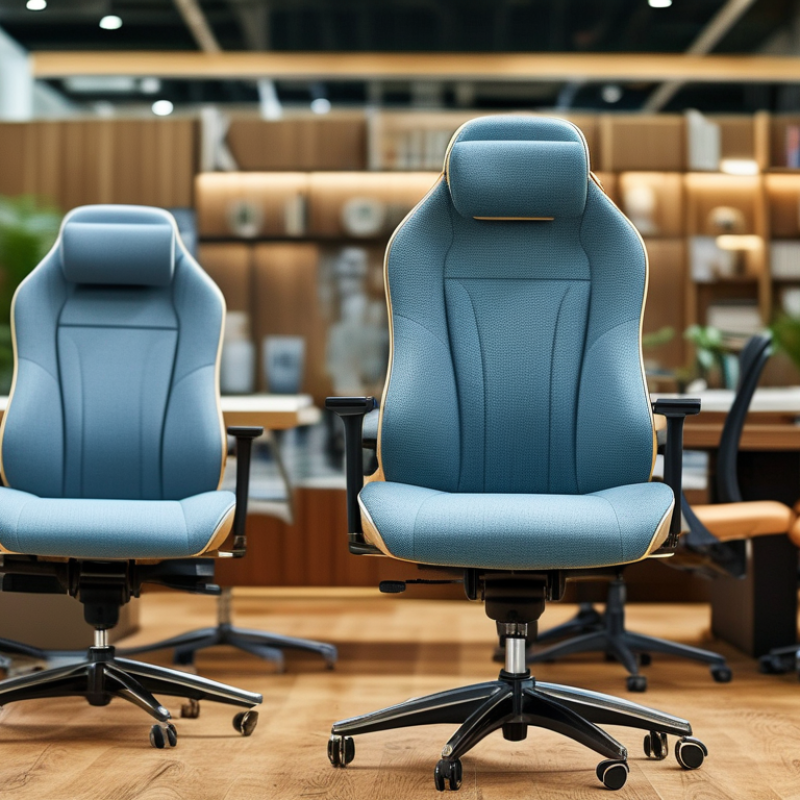
China’s top seating chair suppliers are not defined by catalogs alone. Reliable suppliers show consistent production, clear documentation, and honest communication. A serious factory can explain its frame materials, foam density, fabric grades, and weight capacity without hesitation. It should also provide recent inspection records and traceable sample details.
During supplier evaluation, request a physical sample before placing a large order. Check weld points, stitching, surface finishing, and stability on uneven floors. Ask for load testing results and packaging photographs. Production controls matter too. A dependable supplier uses incoming material checks, in-process inspections, and final quality reviews. However, a polished factory tour can still hide weak follow-up. Keep written records of every promise, tolerance, and delivery date.
Tips: Compare samples from several factories. Confirm replacement procedures before payment. Ask who pays for defects. Visit the facility when possible, but do not treat one visit as complete proof. A second-party inspection may reveal loose screws, color differences, or crushed carton corners. Communication speed is useful, but accurate answers matter more. Some buyers focus too heavily on low prices and regret it later. That mistake is common. A reliable seating chair supplier should protect product consistency, worker safety, and long-term service, even when small production problems appear.

China’s top seating chair suppliers differ most in product range, not factory size. Some focus on office seating, offering task chairs, visitor chairs, and conference models. Others combine dining, lounge, bar, outdoor, and auditorium seating. This wider mix helps buyers consolidate orders, but quality may vary across categories. Grand View Research valued the global office chair market at about US$14.1 billion in 2023, showing strong demand for ergonomic products. The report also forecasts continued growth through 2030.
Product depth matters during supplier comparison. A capable manufacturer should provide clear specifications, including foam density, frame materials, load ratings, fabric abrasion results, and carton dimensions. Suppliers serving hotels often show broader customization, while office-focused factories may provide stronger testing records. China’s export scale is significant. UN Comtrade data places China among the world’s leading furniture exporters, but export volume alone does not prove manufacturing consistency. That is an easy mistake.
Tips: Request samples from three product categories. Compare stitching, welds, adjustment mechanisms, and packaging damage. Ask for recent test reports, not only catalog images. Check whether the same factory produces every model. Sometimes, it does not. Buyers should also inspect replacement-part policies and production lead times. A supplier with fewer designs may still be the safer choice when documentation and quality control are more reliable.
Number of suppliers in a representative group of 10 Chinese seating-chair manufacturers offering each product category. The comparison highlights the breadth of commonly available seating solutions for global buyers.
Office chairs and dining chairs are the most widely available categories, while auditorium, healthcare, and specialized outdoor seating represent more targeted product ranges.
Leading Chinese chair makers usually combine national requirements with international testing methods. Their factories often follow GB/T standards for dimensions, materials, strength, and safety. Export-focused suppliers may also test against EN 12520 or BIFMA requirements. These references help buyers compare products across markets.
During factory audits, inspect the testing process, not only the certificate. Technicians should check static load, repeated-use durability, seat stability, backrest strength, and caster performance.
A chair may support 120 kilograms in one test, yet fail after repeated movement. Welds need clean finishing, while screws should resist loosening.
Foam density, fabric abrasion, flame behavior, and formaldehyde levels also deserve attention. ISO 9001-based quality systems can improve traceability, but paperwork alone proves little.
I have seen good factories miss small details, especially packaging damage and uneven stitching. That weakness needs honest correction.
Tips:
Ask for recent test reports, production samples, and inspection records. Confirm the testing standard, sample size, and laboratory identity. Check whether the report matches the exact model, materials, and structure. Request a pre-shipment inspection with photos and measured results. Keep one approved sample for future comparison. Do not rely on verbal promises. Walk the production line when possible.
For global buyers, a Chinese seating supplier should be judged beyond catalogue photos. CSIL’s World Furniture Outlook 2024 identifies China as the leading furniture-producing country, with roughly one-third of global output. UN Comtrade data also recorded over US$70 billion in Chinese furniture exports under HS Chapter 94 in 2023. Scale helps pricing, but it does not guarantee consistent quality.
Request test reports for frame strength, stability, foam density, fabric abrasion, and fire performance. Match each report with the exact production model. ANSI/BIFMA and ISO 7173 provide useful benchmarks for office and general seating performance. During supplier audits, inspect welds, screw alignment, edge finishing, and carton protection. Ask for recent batch records, not only polished samples. Samples can lie.
Compare landed cost, not factory price alone. Include tooling, packaging, inspection, freight, duties, spare parts, and payment terms. A 7% lower quotation may become more expensive after weaker packaging creates damage claims. For customization, confirm minimum order quantity, prototype fees, mold ownership, color tolerance, and replacement policy. Written tolerances matter. Vague promises cause expensive arguments.
A practical scorecard can weight quality at 40%, total cost at 30%, customization at 20%, and delivery reliability at 10%. These weights are not universal. Buyers should adjust them for hotels, offices, schools, or healthcare projects. I would also request two production references and verify them independently. One overlooked detail remains important: the approved sample must stay beside the production line.
Anonymized supplier benchmark for preliminary sourcing evaluation. Commercial terms, certifications, and production capabilities should be verified directly before purchase.
| Rank | Supplier Profile | Primary Production Region | Main Chair Categories | Typical MOQ | Sample Lead Time | Bulk Lead Time | Customization Capability | Common Materials | Indicative FOB Price | Quality Evidence to Request | Best Fit for Global Buyers |
|---|---|---|---|---|---|---|---|---|---|---|---|
| 1 | Supplier Profile A | Pearl River Delta, Guangdong | Dining, banquet, restaurant, and upholstered chairs | 100–300 units | 7–15 days | 25–45 days | Frame dimensions, upholstery, color, logo, packaging, and carton marks | Steel, aluminum, plywood, solid wood, PU, and fabric | US$18–75/unit | Load testing, welding inspection, material specification, and pre-shipment inspection | Hospitality groups and container-volume buyers |
| 2 | Supplier Profile B | Yangtze River Delta, Zhejiang | Metal dining, outdoor, café, and stacking chairs | 200–500 units | 10–18 days | 30–50 days | Powder coating, tube profiles, seat materials, colors, and stacking design | Steel tube, aluminum, polypropylene, plywood, and vinyl | US$15–65/unit | Coating thickness, corrosion resistance, static load, and dimensional reports | Restaurants, cafés, and outdoor furniture distributors |
| 3 | Supplier Profile C | Pearl River Delta, Guangdong | Office, task, conference, and visitor chairs | 50–200 units | 10–20 days | 35–60 days | Mechanism selection, foam density, mesh, armrests, caster type, and fabric | Mesh, molded foam, nylon, steel, aluminum, and polyester fabric | US$35–160/unit | ANSI/BIFMA test reports, gas-lift documentation, cycle testing, and warranty terms | Office fit-out projects and commercial furniture importers |
| 4 | Supplier Profile D | Yangtze River Delta, Jiangsu | School, auditorium, training, and lecture chairs | 100–300 units | 12–21 days | 35–60 days | Writing tablets, linking systems, upholstery, row layout, and fire-retardant options | Steel, molded plastic, plywood, foam, and treated fabric | US$28–120/unit | Cycle testing, anchoring details, fire documentation, and installation drawings | Education projects and auditorium contractors |
| 5 | Supplier Profile E | Foshan Furniture Manufacturing Cluster | Modern dining, lounge, accent, and home chairs | 50–200 units | 7–14 days | 25–45 days | Color matching, stitching, leg design, dimensions, packaging, and private-label options | Solid wood, plywood, metal, PU leather, velvet, and linen | US$22–95/unit | Moisture content, fabric composition, color approval, joint strength, and inspection photos | Retailers, interior designers, and hospitality resellers |
| 6 | Supplier Profile F | Ningbo and Taizhou Manufacturing Area | Plastic, polypropylene, café, and event chairs | 300–1,000 units | 14–25 days | 40–70 days | Mold color, UV additives, fiberglass reinforcement, cushions, and stacking features | Polypropylene, polycarbonate, fiberglass, steel, and outdoor textiles | US$12–55/unit | UV testing, resin specification, load testing, mold approval, and color consistency records | Large-volume events and contract furnishing programs |
| 7 | Supplier Profile G | Shunde and Zhongshan, Guangdong | Bar, counter, café, and commercial seating | 100–300 units | 10–18 days | 30–50 days | Seat height, swivel mechanisms, footrests, upholstery, base finish, and logo packaging | Steel, aluminum, plywood, PU, fabric, and molded foam | US$25–110/unit | Stability test, weld inspection, seat-height measurement, abrasion testing, and spare-parts policy | Restaurant chains and commercial interior projects |
| 8 | Supplier Profile H | Xiamen and Quanzhou, Fujian | Rattan, wicker, outdoor, patio, and resort chairs | 100–400 units | 12–21 days | 35–60 days | Weave pattern, frame color, cushion fabric, dimensions, stacking, and weather-resistant finishes | Aluminum, PE rattan, teak, textilene, foam, and outdoor polyester | US$35–150/unit | Salt-spray testing, UV resistance, moisture control, frame welding, and outdoor-use warranty | Resorts, outdoor retailers, and landscape furnishing buyers |
| 9 | Supplier Profile I | Hebei and Tianjin Industrial Area | Industrial, workshop, laboratory, and heavy-duty chairs | 100–500 units | 14–25 days | 35–65 days | Seat height, foot rings, conductive components, casters, backrests, and protective coatings | Steel, PU foam, polyurethane, chrome, nylon, and conductive materials | US$20–100/unit | Weight capacity, stability, chemical resistance, electrical specifications, and dimensional inspection | Factories, laboratories, workshops, and industrial distributors |
| 10 | Supplier Profile J | Jiangxi and Anhui Woodworking Region | Solid wood, farmhouse, dining, and upholstered chairs | 100–300 units | 14–28 days | 40–70 days | Wood species, stain, paint, carving, dimensions, upholstery, and flat-pack packaging | Rubberwood, ash, beech, oak, plywood, PU, and fabric | US$30–130/unit | Wood moisture records, formaldehyde documentation, joint testing, finish inspection, and packaging drop test | Home-furnishing retailers and boutique hospitality projects |
Importing seating chairs from China requires more than comparing factory prices. UNCTAD reports that maritime transport carries over 80% of global merchandise trade by volume. Therefore, freight planning strongly affects landed cost. Buyers should confirm carton dimensions, stacking limits, container loading plans, and moisture protection before production. A chair that looks inexpensive may become costly after oversized packaging, port fees, and inland delivery.
Compliance needs equal attention.
The correct HS classification should be checked with a customs broker, because chair materials and functions can change the applicable code. Suppliers should provide material specifications, test reports, packing lists, commercial invoices, and country-of-origin documents. Depending on the destination, buyers may also need tests for load strength, flammability, formaldehyde, or restricted chemicals. Requirements differ by market. Do not rely on a generic certificate.
The World Bank’s Logistics Performance Index 2023 ranked China 19th globally, with an overall score of 3.7. This indicates strong logistics capability, but it does not remove shipment risks.
A reliable support process includes pre-shipment inspection, photo records, barcode checks, and document review before booking. Confirm who handles damaged cartons and missing parts.
Small details matter. In practice, even experienced buyers sometimes approve samples too quickly. That is a weakness worth correcting.
A written escalation plan, response deadline, and spare-part arrangement can protect installation schedules when problems appear.
Update your browser to view this website correctly. Update my browser now