How to Choose the Best Garden Shed in 2026?
Choosing the best Garden Shed in 2026 starts with a simple question: what will you actually store? A mower, a few hand tools, and a stack of cushions need less room than bicycles, potting supplies, and a workbench. Measure the items, then check the shed’s interior dimensions—not just its advertised footprint. A narrow doorway can make a spacious-looking model awkward. It happens.
The right choice also depends on your garden’s weather, ground, and daily use. Timber can look warm beside a fence, but it needs regular care. Metal may be low-maintenance, yet condensation can trouble stored items without suitable ventilation. Resin is easy to clean, though its appearance and rigidity vary by model. Landscape designer Piet Oudolf is often associated with the observation, “A garden is a process, not a product.” That idea suits shed planning: the best fit should support how your outdoor space changes, not just how it looks today.
Before comparing prices, inspect the floor, roof, ventilation, lock, and warranty. Think about access too: will the door open fully beside a hedge or path? A level, well-drained base matters, even for a small shed. One detail is easy to overlook: assembly space. You may need room to lay out panels before the build begins. No material wins in every garden, and a larger shed is not automatically better. This guide weighs practical trade-offs so you can choose a Garden Shed that fits your belongings, site, budget, and tolerance for upkeep.
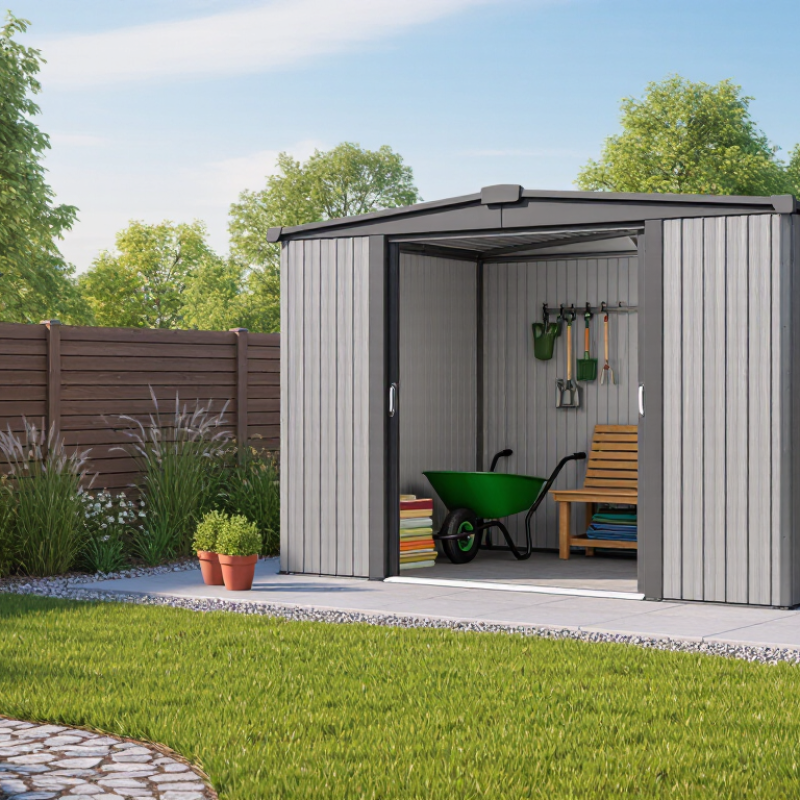
Define Your Garden Shed’s Purpose and Storage Requirements
Before choosing a garden shed, decide what it needs to do. Will it hold a mower, hand tools, bicycles, or bags of compost? A shed for a mower needs a wide doorway and a clear turning path. Measure your largest item, including handles or attachments. Measure the route to the shed, too. Measure before browsing.
List what you own and what you may add within a year. Group items by how often you use them: daily tools should be easy to reach, while seasonal pots can sit higher. Note the dimensions of bulky equipment and allow space to lift it safely. A narrow walkway can make a roomy shed feel cramped. Leave room to move.
Think about storage beyond floor space. Shelves, hooks, and a workbench can improve access, but they also reduce usable clearance. If you store damp boots or freshly used tools, plan for ventilation and a place where wet items can dry. It is tempting to buy extra capacity “just in case,” yet an oversized shed may take useful garden space. Recheck your list after a few days; forgotten items often appear, and some things may not belong in the shed at all.
Measure Your Available Space and Check Local Regulations
Before choosing a garden shed, measure the space where it will actually sit. Mark the corners with stakes or a garden hose, then check the footprint with a tape measure. Leave room for the door to open, for you to walk around the walls, and for a wheelbarrow to pass. A shed may fit on paper but feel cramped beside a fence. Check roof overhangs, too. They can extend beyond the base and complicate placement.
Look upward as well as outward. Low branches, overhead wires, and nearby windows may affect where a shed can go. Note slopes and puddles after rain; a level-looking patch can still drain poorly. A rough sketch helps, though it may miss small obstacles. That happens.
Before buying, check local rules with your city or county planning office. Requirements can vary by shed size, height, location, and intended use. Ask about permits, boundary setbacks, drainage, and any neighborhood or property restrictions. Keep a copy of the guidance, and confirm details if the wording is unclear. Do this before delivery, not after a shed is sitting in the wrong spot. A quick phone call can save time, but written confirmation is more dependable.
How to Choose the Best Garden Shed in 2026? - Measure Your Available Space and Check Local Regulations
| Planning dimension | Example or measurement | How to use it when choosing a shed |
| Compact footprint | 6 × 4 ft (1.83 × 1.22 m); about 24 sq ft (2.23 m²) | Can suit basic tool storage. Check that the door opening and interior layout fit the largest items you plan to store. |
| Small-to-medium footprint | 8 × 6 ft (2.44 × 1.83 m); about 48 sq ft (4.46 m²) | Offers more room for shelves and garden equipment. Allow space to open the door and move items in and out. |
| Medium footprint | 10 × 8 ft (3.05 × 2.44 m); about 80 sq ft (7.43 m²) | May accommodate larger equipment or a workbench. Measure the complete outside dimensions, including any overhanging roof. |
| Large footprint | 12 × 10 ft (3.66 × 3.05 m); about 120 sq ft (11.15 m²) | Requires a larger clear area and may trigger additional local planning or building requirements. Confirm rules before purchase. |
| Available site width and depth | Measure the usable ground area at several points; note fences, trees, drains, and uneven boundaries. | Compare the smallest usable width and depth with the shed’s actual external dimensions, not just its advertised floor size. |
| Working and access space | Mark the footprint on the ground and test the door swing, access route, and space needed for installation. | Treat extra clearance as a practical planning allowance, not a universal legal setback; required distances vary by location and property. |
| Height and roof profile | Record the available height and check the shed’s maximum external height, including the roof peak. | Height limits and how height is measured can differ between local authorities. Check the applicable local rules. |
| Boundary and easement checks | Identify property boundaries, utility access areas, easements, and any restrictions in property documents. | Do not assume that a fence marks the legal boundary or that an accessory shed is allowed in every part of the lot. |
| Local permits and building rules | Ask the local planning or building department about permits, size thresholds, placement, height, and construction requirements. | Requirements depend on jurisdiction and may also be affected by zoning, historic-district status, or other site-specific conditions. |
| Ground and drainage | Check whether the site is level, drains well, and can support the planned base and shed load. | Choose a stable location and follow the shed and foundation instructions; keep drainage and water flow in mind when selecting placement. |
Compare Shed Materials, Construction, and Weather Resistance
How to Choose the Best Garden Shed in 2026?
Compare materials before comparing prices. Wood is easy to repair and customize, but it needs sound drainage and periodic protection. The USDA Forest Products Laboratory’s Wood Handbook (FPL-GTR-282, 2021) notes that decay fungi generally need wood moisture content above about 20%. That makes a raised base and dry, ventilated walls practical safeguards. Galvanized steel avoids rot, though damaged coatings can expose metal to corrosion. Resin resists rust and decay, but panel thickness, UV protection, and secure anchoring still matter. No material is maintenance-free.
Construction determines how well a shed handles rough weather. Check for a rigid frame, firmly fastened roof panels, and doors that close without gaps. ASCE/SEI 7-22 provides location-specific criteria for calculating wind loads; a generic wind claim may not suit your site. Snow, driving rain, and gusts can expose weak joints quickly. Small details matter. Even a sturdy shed can fail on a poorly drained base.
Tips: Match the shed to your local wind and rainfall conditions. Anchor it to a stable foundation, keep wood clear of soil, and inspect seams after heavy storms. I would not choose by material alone; a well-built, properly installed shed often outlasts a thicker-looking one.
Evaluate Access, Ventilation, Security, and Maintenance Needs
A shed should fit the way you work, not just the space available. Measure the widest item you plan to store, such as a mower or wheelbarrow, and check that the doorway allows it through comfortably. Leave room to turn inside, too. A narrow door can make everyday storage frustrating, even when the shed looks spacious on paper. Measure twice.
Ventilation matters in damp or changeable weather. Look for vents on opposing walls, or windows that open without exposing stored tools to rain. Airflow can help reduce condensation, but it will not solve every moisture problem; a level, well-drained base matters as well. Notice where rainwater runs after a storm. That detail is easy to miss.
For security, consider a sturdy door, a dependable lock, and a location visible from the house. No shed is entirely theft-proof, so avoid treating a lock as a complete solution. Maintenance depends on the material and local conditions. Timber may need periodic sealing, while metal panels can still need checks for rust, loose fixings, and water pooling. Make sure you can reach the walls and roof edges for those checks. A shed squeezed tightly behind a fence may be harder to maintain than expected.
How to Choose the Best Garden Shed in 2026?
Compare example shed footprints by calculated floor area. The dimensions are examples, not a standard-size recommendation.
How to use this chart: Choose a footprint that fits your storage needs and available space. Before buying, check that the door opening and approach allow items to pass through, ventilation suits what you plan to store, the shed can be secured appropriately, and its materials and finish match the maintenance you are willing to do.
Match Your Budget to Long-Term Value and Warranty Coverage
A low purchase price can hide expensive weaknesses. Compare the shed’s delivered cost, site preparation, anchoring, and likely repairs—not just the sticker price. Houzz’s 2024 U.S. Houzz & Home Study reported a $2,000 median spend on outdoor projects in 2023. That figure covers many kinds of work, not sheds, but it offers a useful budget reference. Set aside money for a level base and water management. A shed that sits in damp soil may need repairs sooner.
Warranty details reveal what the price actually buys. Check the coverage period for the structure, roof, doors, and finish separately. Read exclusions for ground contact, wind, leaks, and maintenance. Ask whether labor and replacement parts are included, and whether coverage transfers to a future owner. The USDA Forest Products Laboratory’s Wood Handbook explains how moisture exposure affects wood performance, making drainage and ventilation practical value checks. A long warranty is not automatically strong coverage. Fine print matters.
Tips: Compare three written quotes. Photograph the site and ask who handles base preparation. Keep receipts and maintenance records. If the warranty feels vague, pause. I would still weigh a shorter, clearer warranty against a longer promise with broad exclusions; that trade-off is easy to underestimate.