A Crystal Scented Candle combines a fragranced wax candle with decorative crystals, often arranged across the surface or around its container. The exact design varies by maker. “Crystal scented candle” is not a standardized technical term, so the materials and intended use should be checked on the product label. Some candles include removable stones; others place decorative pieces where they may be exposed to heat. That difference matters.
When lit, the wick draws melted wax upward, and the flame releases fragrance as the wax warms and vaporizes. The scent’s strength depends on the fragrance, room size, airflow, and candle construction. A crystal does not make the candle burn more effectively, and claims that stones change the fragrance or provide measurable health benefits should be treated cautiously. The appeal may simply be visual. A little sparkle can make a quiet evening feel special.
Before lighting, read the maker’s instructions and inspect the surface. Remove loose decorations if the label advises it, and keep the candle away from drafts, fabrics, children, and pets. Never leave a burning candle unattended. Trim the wick as directed, and stop using the candle when little wax remains or its container shows damage. Crystals can become hot, shift, or interfere with a steady flame, depending on their placement. They are not all suitable for candle use. Understanding what is decorative and what is designed to burn helps explain how a Crystal Scented Candle works—and where careful use begins.
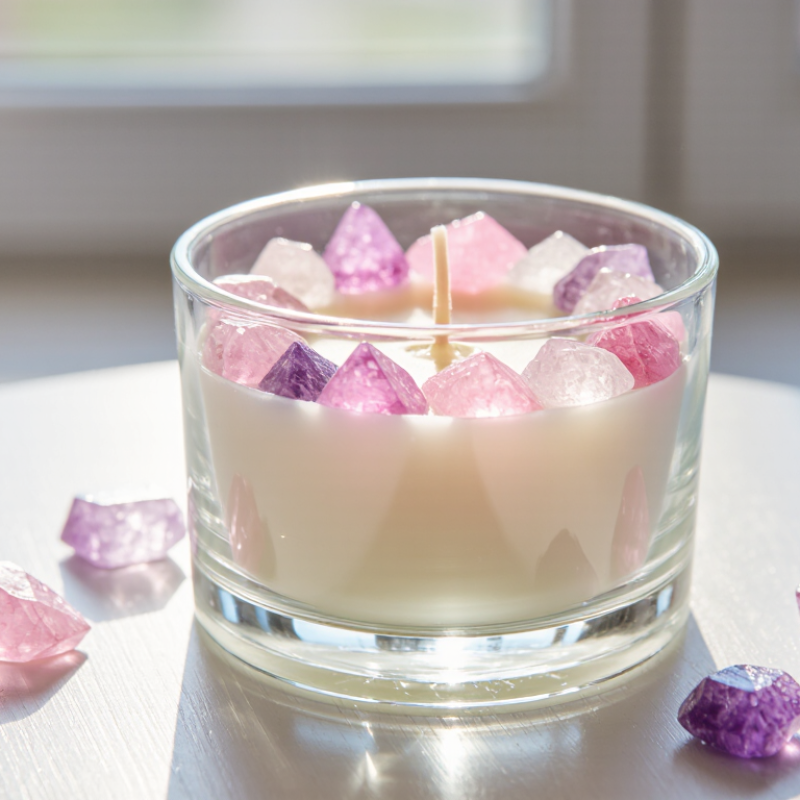
A crystal scented candle combines three familiar elements: wax, fragrance, and decorative crystals. The crystals may sit on the surface or inside the wax. Common choices include quartz, amethyst, or rose quartz. They add color, texture, and a ritual-like feeling, but they do not scientifically change the fragrance or purify indoor air.
The candle works through a simple process. A wick draws melted wax upward, where heat releases scented molecules into the room. Fragrance performance depends on wax quality, oil concentration, wick size, and room ventilation.
Market context
The National Candle Association reports that about 70% of U.S. households use candles, showing their continued role in home comfort. Grand View Research valued the global candle market at approximately $12.88 billion in 2022. That growth reflects atmosphere and personal experience, not proven crystal energy.
Tips:
Trim the wick to about 6 millimeters before lighting. Place the candle on a stable, heat-resistant surface. Keep loose crystals away from the flame. Never leave it burning unattended. Stop using the candle when roughly 1 centimeter of wax remains.
A crystal candle can feel special, but its emotional value is personal. Its safety and scent performance need practical attention. The symbolism may be beautiful. The science is more limited.
A crystal scented candle combines a traditional wax candle with decorative crystals, usually placed on the surface or arranged around the wick. Its main components are wax, a wick, fragrance, and mineral pieces. The crystals add visual texture, but they do not create the scent or make the candle burn differently in a predictable way.
The wax is often soy, paraffin, coconut, or a blend. Each type can affect the candle’s firmness, scent release, and burn behavior. A cotton or wooden wick draws melted wax upward, where the flame consumes it. Fragrance oils provide the aroma; their concentration and compatibility with the wax matter more than the crystals do. Small details count. A loose wick can cause uneven melting, while too much fragrance may affect how cleanly a candle burns.
Crystals vary in size and type, and some makers use polished chips for a smooth, colorful finish. They should be positioned securely and kept clear of the wick and flame. As the wax melts, decorative pieces can shift. That part is easy to overlook. Follow the candle’s care instructions, trim the wick as directed, and stop using it when little wax remains or any crystal sits close to the flame.
| What Is a Crystal Scented Candle and How Does It Work? — Materials and Components | ||
|---|---|---|
| Component or Feature | What It Is Made Of | Role and How It Works |
| Candle wax | Common options include paraffin, soy wax, beeswax, and blends. Their properties vary by formulation. | The wax is the fuel that melts around the wick and feeds the flame. Most of the candle’s fragrance is released as scented wax warms and vaporizes fragrance ingredients. |
| Fragrance | A candle fragrance formulation may contain aromatic ingredients, such as fragrance oils or essential oils, blended for use in candles. | Fragrance is carried in the wax and becomes noticeable as the candle warms. The crystals are generally decorative and are not, by themselves, the source of the candle’s scent. |
| Wick | Typically braided cotton or another wick material selected for the candle’s size and wax formulation. | The wick draws melted wax upward by capillary action. The flame consumes wax vapor, producing heat and light; wick size and trimming affect how the candle burns. |
| Crystals or mineral decorations | Small pieces of minerals or glass-like decorative stones may be placed on the candle’s surface or arranged around it. | They provide visual interest and may be associated with a particular color or decorative theme. They do not reliably add fragrance or change the candle’s basic burning mechanism. |
| Container or holder | May be a heat-resistant glass vessel, metal tin, or a separate holder designed for candle use. | The container supports the wax and helps contain the melt pool. Use only a stable, heat-resistant surface and follow the candle maker’s instructions. |
| How the candle works | Wax, wick, fragrance, and any decorative crystals are assembled as a single candle product. | When lit, the flame melts nearby wax. Liquid wax travels up the wick, vaporizes near the flame, and burns. Heat also releases fragrance into the surrounding air. |
| Crystal and flame safety | Decorative stones may be heat-sensitive, coated, or irregularly shaped; their composition can differ between products. | Keep loose or large decorations away from the wick and flame. Do not move a burning candle, and stop using it if decorations shift into the flame, the container cracks, or the candle becomes unstable. |
| Basic use and care | Follow the product’s burn-time and care instructions; keep the wick trimmed as directed. | Burn the candle within sight, away from drafts and flammable materials, and out of reach of children and pets. Extinguish it before leaving the room or going to sleep. |
A crystal scented candle works through warmed wax, not through the crystal itself. When the wick burns, its flame melts a small pool of wax around the wick. Fragrance molecules in that liquid wax evaporate and travel through the room, carried by gentle air movement. The scent may seem stronger after several minutes because the warm pool grows and releases more fragrance. Not magic—just heat and evaporation.
The crystal is usually decorative. It does not reliably create or intensify fragrance, and its mineral type, size, and placement can affect how the candle burns. Follow the maker’s care instructions; if a stone sits near the wick or shifts as wax melts, extinguish the candle and let it cool before handling it. The National Candle Association reports that about seven in ten U.S. households use candles, but that broad consumer figure does not measure crystal candles specifically. A practical test is simple: note the scent before lighting, then again after the wax pool forms. Keep the room ventilated. And be honest: scent perception varies, so one person’s “subtle” may be another’s “too much.”
A crystal scented candle combines a fragranced wax blend with decorative crystals placed on or around the surface. When lit, the wax melts and releases fragrance into the room. The crystals are mainly decorative; there is no reliable evidence that they change the candle’s scent or provide medical benefits. Keep them away from the wick and flame.
People commonly use these candles to create a pleasant atmosphere during reading, bathing, or quiet evenings. The National Candle Association reports that seven in ten U.S. households use candles, and fragrance is a leading factor in candle purchases. A scented candle may make a room feel more inviting, though scent preferences vary. It is not a treatment for stress, sleep problems, or illness. The crystals can add color and texture to a bedside table or gift display. Pretty, but not magic.
Tips: Trim the wick to about ¼ inch before lighting, place the candle on a stable, heat-resistant surface, and never leave it unattended. Check that crystals cannot slide into the flame as the wax melts. Stop burning when roughly ½ inch of wax remains. Use in a ventilated room, and discontinue use if the fragrance irritates you.
A crystal scented candle combines wax, fragrance, and decorative stones in one heat-resistant vessel. The wax melts around the wick, while fragrance molecules evaporate into the room. Crystals may add color, texture, or symbolic meaning, but there is no reliable scientific evidence that they purify air or change fragrance performance. Their main role is decorative.
Safe use requires attention. The National Candle Association recommends trimming the wick to about 6 millimeters before each burn. Keep the candle on a stable, heat-resistant surface, at least 30 centimeters from curtains, books, and other flammable materials. Never move it while hot. Loose crystals can become extremely hot, so do not touch or rearrange them during burning. A crystal may also trap heat unevenly. That detail is easy to overlook.
The National Fire Protection Association reported an average of 7,400 home candle fires annually in the United States from 2016 to 2020. Treat every flame seriously. Burn the candle only while visible, and keep children and pets away. Extinguish it with a snuffer instead of pouring water onto hot wax. Stop burning when about 1.3 centimeters of wax remains, or follow the maker’s instructions if they differ. Do not burn it overnight. I sometimes find “natural” packaging reassuring, but natural does not mean fireproof. Inspect the vessel for cracks, discontinue use if it becomes excessively hot, and allow the wax to cool completely before cleaning or storing it.
Update your browser to view this website correctly. Update my browser now