How to Choose the Right Floor Lamp in 2026?
Choosing a Floor Lamp in 2026 is less about chasing a fashionable shape. It is about matching light to daily habits, room proportions, and energy use. A reading corner needs focused brightness, while a sofa area benefits from softer, wider illumination. Small details matter. The shade opening, switch position, cord length, and base weight can change comfort quickly.
Lighting designer and author Randall Whitehead offers a useful principle: “Lighting is the jewelry of architecture.” This idea guides our review of modern Floor Lamp options. We will examine beam direction, color temperature, dimming, glare control, material quality, and repairability. Smart controls may add convenience, but they are not automatically better. A simple foot switch can be more dependable than an app, especially when hands are full.
This guide considers measured performance rather than showroom drama. Look for clear specifications, stable construction, and realistic warranty terms. A warm 2700K lamp may feel calm beside a fabric sofa, while 3000K can support work without appearing harsh. Yet personal preference still matters. No checklist can predict every room. We may favor a beautiful lamp that needs better cable management, or reject a clever design after noticing distracting glare. That uncertainty is useful. It keeps the choice practical, honest, and open to reconsideration. By comparing real use with published claims, readers can choose a Floor Lamp that serves the room for years, not one season.
Define Your Lighting Needs and Room Requirements
Before choosing a floor lamp in 2026, define the task it must support. Reading beside a sofa needs controlled, low-glare light, while general room lighting needs wider distribution. Measure the room, seating height, and available floor space first. A narrow base suits a crowded corner, but it may feel unstable near children or pets. I once chose a tall lamp without checking the shade position. The light landed directly in my eyes.
Color temperature also matters. Warm light near 2700K can make a bedroom feel calmer. A neutral range near 3000K–4000K may suit a home office or craft table. The Illuminating Engineering Society emphasizes matching illumination to visual tasks, not simply increasing brightness. Choose adjustable output when one room serves several purposes. Too much light can be uncomfortable.
Efficiency deserves practical attention. The U.S. Department of Energy reports that LED lighting uses at least 75% less energy than incandescent lighting and can last up to 25 times longer. The International Energy Agency estimates that lighting represents about 15% of global electricity consumption. Check bulb replacement access, dimmer compatibility, and heat around the shade. These details are easy to overlook. A beautiful lamp can still be the wrong lamp if its controls are confusing or its light misses the work surface.
Choose the Right Floor Lamp Type and Design
How to Choose the Right Floor Lamp in 2026?
Choose the Right Floor Lamp Type and Design
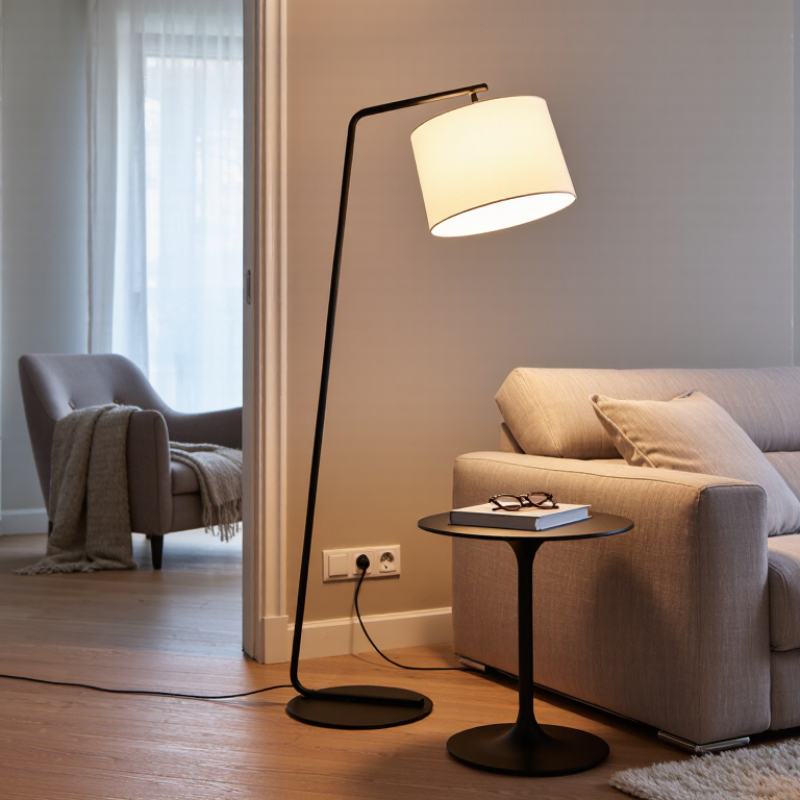
Choosing the right floor lamp begins with the room’s purpose, not its appearance. A reading corner usually needs an adjustable task lamp with focused light. An arc lamp can illuminate a sofa without occupying the table beside it. For soft ambient lighting, a torchiere directs light toward the ceiling and reduces harsh shadows. A tripod design adds visual character, but its wide legs require careful floor planning.
Measure the space before shopping. The lamp should not block walkways or brush against nearby furniture. I usually leave at least 30 centimeters around its base. Check the shade height beside seating, too. A low shade may shine directly into your eyes. A dimmable model gives better control during reading, conversation, and evening relaxation. Warm light around 2700–3000K often feels comfortable in living rooms, while neutral light may suit work areas.
Design should support the room, not compete with it. Match the lamp’s shape with existing lines, such as a rounded shade beside a curved chair. Look for stable construction, protected wiring, and clearly labeled electrical specifications. I once chose a beautiful, narrow lamp that wobbled whenever the floor vibrated. It looked refined but performed poorly. That mistake taught me to test balance, switch placement, and bulb access before judging the finish. Small details matter.
Compare Brightness, Bulb Options, and Light Quality
How to Choose the Right Floor Lamp in 2026?
Brightness should match the room, not just the lamp’s appearance.
For reading, start near 800 lumens, the output commonly associated with a traditional 60-watt incandescent bulb, according to the U.S. Department of Energy. A darker room may need 1,000 to 1,500 lumens. Use a dimmer when possible. It gives your eyes a gentler transition from daylight to evening.
Bulb choice also affects operating cost and heat. The Department of Energy reports that LED bulbs use at least 75% less energy and can last up to 25 times longer than incandescent bulbs. Choose replaceable bulbs if you want easier maintenance. Integrated LEDs can look slimmer, but replacement may become difficult later. That trade-off is easy to overlook. Very warm bulbs, around 2,700K, create a soft corner glow. Bulbs near 3,000K to 4,000K usually make reading and detailed tasks clearer.
Light quality deserves closer attention. Look for a color rendering index, or CRI of 90 or higher when fabric, artwork, or skin tones must appear natural. ENERGY STAR lighting specifications emphasize efficient performance, while professional lighting guidance also considers glare, flicker, and color consistency. A high CRI does not guarantee comfort. I have found that a bright bulb can still feel harsh when its shade exposes the LED directly. Check the lamp from your seated position. The best choice may be slightly less bright, but easier to live with.
Check Size, Placement, Materials, and Safety Features
How to Choose the Right Floor Lamp in 2026?
Size should follow the room, not the showroom. Measure the ceiling, sofa height, and walking route before shopping. A tall lamp beside a low sofa can look unbalanced. Its shade should sit near eye level when you are seated. Leave clear space around doors, curtains, and children’s play areas. Measure twice. I still misjudge scale when viewing lamps online.
Placement affects comfort and safety. Use a reading lamp beside a chair, with light falling over your shoulder. Avoid placing it behind a television, where glare can strain your eyes. The International Energy Agency’s Energy Efficiency 2024 report says lighting uses about 15% of global electricity. Choose an efficient LED source with a suitable color temperature, rather than maximum brightness. The U.S. Department of Energy reports that LEDs use at least 75% less energy and last up to 25 times longer than incandescent bulbs.
Materials also change performance. Metal bases offer stability, while glass shades need careful handling. Fabric shades soften light but may collect dust near warm bulbs. Look for enclosed LED compatibility, a weighted base, protected wiring, and a tested safety certification mark. Keep cords flat and away from heat sources. Check the manufacturer’s instructions for bulb wattage and clearance. A lamp may look beautiful, yet its cable can still become a trip hazard. That detail is easy to overlook.
Set a Budget and Evaluate Energy Efficiency in 2026
Choosing a floor lamp in 2026 starts with a realistic budget, not a fashionable shape. Include the bulb, delivery, and possible replacement parts in your calculation. I once focused on the lowest purchase price and ignored energy use. That choice cost more over several years.
Check the lamp’s lumens, wattage, and estimated annual electricity consumption. Lumens show brightness, while watts show power demand. A reading corner may need about 800 to 1,200 lumens. A soft living-room light can use less.
Energy-efficient LED lighting usually produces more light with less electricity. However, efficiency numbers can be confusing. Compare lamps under the same brightness level, not only by wattage. Your local electricity rate also affects the real cost.
Look for a clear energy label and a replaceable light source when possible. A dimmer can reduce consumption when full brightness is unnecessary. Timers help prevent overnight waste, especially in bedrooms or hallways.
Check the lamp’s stability, cord length, heat control, and switch quality before buying. These details matter more than glossy product photographs.
I would also question unusually cheap lamps with vague specifications. They may be safe, but the missing information makes comparison difficult.
A repairable design may cost slightly more today, yet it can reduce waste and future spending. My own mistake was assuming efficient meant automatically practical; a bright lamp can still feel harsh in a small room.