Top Cement Mortar Suppliers for Global Buyers?
Choosing a reliable Cement Mortar supplier takes more than comparing prices. Global buyers must match the product to its intended use, such as masonry, rendering, or tile installation. A mortar that performs well on one project may not suit another. Check the product’s stated application, mixing ratio, working time, and storage requirements before requesting a quotation.
Ask suppliers for current technical data sheets and safety information, plus details about packaging, batch identification, and shelf life. Samples can help teams assess workability and consistency, but they cannot replace project-specific testing. Small details matter. A clear label and intact moisture-resistant bag can make a real difference at the job site.
International orders add further questions. Confirm production capacity, minimum order quantities, lead times, shipping terms, and how the supplier handles damaged or delayed goods. Check whether the documentation and product specifications meet requirements at the destination; these can vary by market and project. Independent test reports may support a comparison, but buyers should confirm their scope and date rather than relying on a logo alone.
A polished catalog does not guarantee dependable deliveries. Nor is the lowest quote always the best value once freight, storage, and quality checks are included. The comparison is rarely perfect. Some suppliers disclose more than others, and that deserves attention. This guide explores practical ways to evaluate suppliers, ask sharper questions, and build a shortlist suited to real project needs.
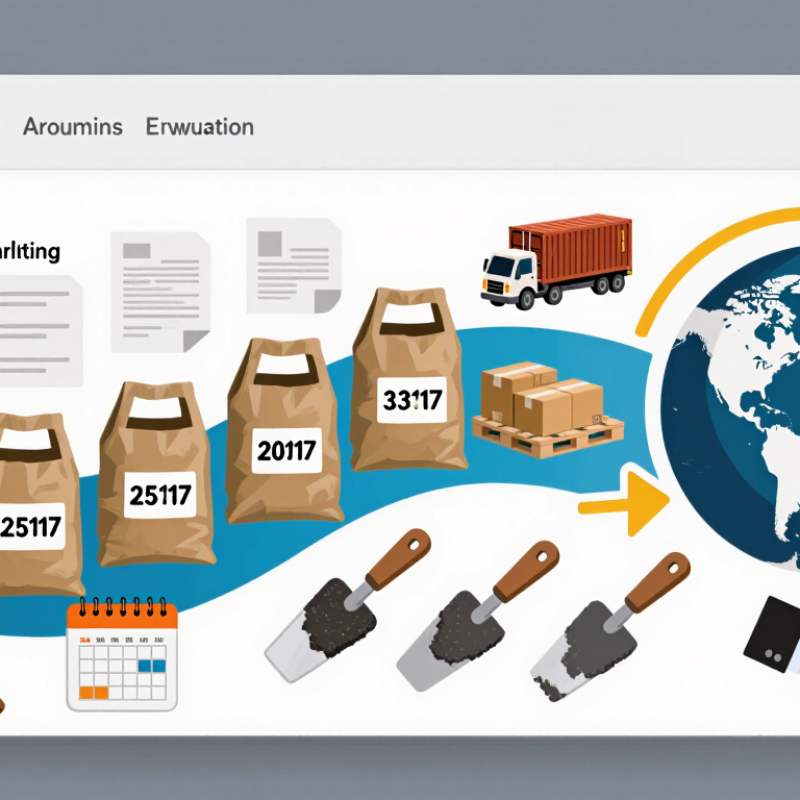
Define Cement Mortar Scope Through EN 998-1 and EN 998-2 Product Classes
For global buyers, “cement mortar” is too broad to guide a reliable supplier comparison. EN 998-1 covers rendering and plastering mortars; EN 998-2 covers masonry mortars. The distinction matters on site. A bag intended for block joints may not suit an exposed façade finish.
Check the declared product class and intended use, not just the strength figure. Under EN 998-1, classifications include general-purpose, lightweight, colored, one-coat, and renovating mortars. Under EN 998-2, buyers may encounter general-purpose, thin-layer, or lightweight mortars, alongside strength classes such as M5. These labels describe different properties; they are not a simple quality ranking. A higher strength can be a poor fit if the substrate or joint needs greater flexibility.
Ask suppliers for the declaration of performance, technical data, and installation guidance for the exact product. Then compare water absorption, adhesion, working time, and curing conditions against the project specification. Useful evidence includes test methods, batch traceability, and clear instructions for mixing and application. Details matter. A mortar that performs well in a dry test room may behave differently on a windy, sunlit wall. That gap deserves attention, and sometimes a small site trial is wiser than trusting a tidy data sheet alone.
Compare ASTM C270 Strengths: M 2,500; S 1,800; N 750; O 350 psi
For global buyers comparing cement mortar suppliers, ASTM C270 gives a practical strength baseline: Type M requires at least 2,500 psi, Type S 1,800 psi, Type N 750 psi, and Type O 350 psi. These are minimum average compressive strengths at 28 days, not guarantees of performance in every wall or climate. ASTM C109/C109M describes the laboratory cube test used to measure mortar strength. A 50 mm test cube is useful evidence, but it cannot reproduce a rain-soaked joint or a freezing jobsite.
Higher strength is not automatically the better purchase. Type M suits demanding structural applications, while lower-strength mortars can better accommodate some masonry units. Ask suppliers to identify the mortar type, test age, test method, and whether the mix follows ASTM C270’s property or proportion specification. Small differences in water content and curing can affect test results. That detail matters. The ASTM figures are a useful comparison, but project specifications and local building requirements still guide selection. A strength number alone is incomplete.
ASTM C270 Mortar Types: Minimum Compressive Strength
Specified 28-day compressive strength by mortar type
ASTM C270 minimum compressive strengths are 2,500 psi for Type M, 1,800 psi for Type S, 750 psi for Type N, and 350 psi for Type O. These are specification thresholds, not supplier-specific test results.
Qualify Suppliers by ISO 9001 Quality Systems and EN 998-2 Declarations
For global cement mortar buyers, an ISO 9001 certificate is a useful starting point, not proof of mortar performance. ISO’s Survey of Certifications 2022 recorded 1,265,216 valid ISO 9001 certificates worldwide. That scale makes verification important: check the certificate’s scope, issuing body, and expiry date. Does it cover the manufacturing site supplying your order? Ask for recent production records and a clear process for handling nonconforming batches. Paperwork can look tidy. The plant floor matters too.
For masonry mortar, request the EN 998-2 Declaration of Performance and match it to the intended use. Check declared compressive strength, bond strength, chloride content, and water absorption where applicable. Confirm the product designation, test method, and declared values; do not rely on a sales sheet alone. EN 998-2 addresses factory-made masonry mortars, while ISO 9001 concerns the supplier’s quality management system. They answer different questions. A declaration also cannot predict every jobsite result: substrate condition, mixing water, and curing affect performance. Ask for batch traceability and technical support for the climate and masonry units at your project. Some details are easy to overlook, including whether test data represent the supplied formulation. That deserves a follow-up.
Benchmark Sourcing Against 4.1 Billion Tonnes of Global Cement Output (USGS, 2023)
Global cement output reached about 4.1 billion tonnes in 2023, according to the USGS. That figure offers useful scale for buyers comparing cement mortar suppliers, but it is not a measure of finished mortar production. Mortar also depends on graded sand, water, additives, mixing capacity, and local demand. The distinction matters. A large cement market does not guarantee that a supplier can deliver consistent bagged mortar to your project site.
Use the global figure as context, then test suppliers against practical evidence. Ask for product data sheets, batch consistency records, packaging options, and typical lead times. Check whether samples remain workable after transport and storage; a neat laboratory result can behave differently on a hot, windy site. Confirm the intended application, such as masonry joints or repair work, before comparing strength values. I would also ask how the supplier manages changes in raw-material sources. That question is easy to overlook, and the answer may be less precise than expected. Compare delivered cost per usable tonne, not just the quoted price per bag, and record any assumptions about moisture, waste, and handling.
Top Cement Mortar Suppliers for Global Buyers? - Benchmark Sourcing Against 4.1 Billion Tonnes of Global Cement Output (USGS, 2023)
| Country / Market | 2023 Cement Output
(million tonnes) | Approx. Share of
Global Output | How to Use This Benchmark |
| China | 2,000 | 48.8% | Largest national production base in this comparison; use as a scale benchmark when assessing potential sourcing markets. |
| India | 410 | 10.0% | A major production base by volume; assess individual mortar manufacturers, product specifications, and export capability separately. |
| Vietnam | 110 | 2.7% | Compare potential suppliers against the country’s cement-production scale, while verifying mortar product availability directly. |
| United States | 91 | 2.2% | Use national output as market context; confirm regional delivery coverage and the relevant mortar standards for the destination. |
| Turkey | 79 | 1.9% | Production volume provides a country-level reference point, not a measure of any individual supplier’s export capacity. |
| Brazil | 64 | 1.6% | Use the output figure to frame the domestic supply base; check freight, packaging, and product compliance for each order. |
| Indonesia | 63 | 1.5% | Country production is a broad sourcing indicator; verify whether the required mortar formulations are offered for export. |
| Iran | 63 | 1.5% | Consider the reported production scale alongside applicable trade, payment, and shipping requirements. |
| Russia | 62 | 1.5% | Use the figure only as production context, and independently assess market access and logistics for the destination. |
| Saudi Arabia | 56 | 1.4% | Compare supplier quotations and delivery terms directly; national cement output does not establish mortar export availability. |
Source: U.S. Geological Survey (USGS), Mineral Commodity Summaries 2024: Cement, estimates for 2023. The world total was approximately 4.1 billion tonnes. Shares are approximate calculations from the rounded country figures shown. Cement output is a country-level benchmark—not a ranking of cement mortar suppliers, exports, or individual company capacity.
Compare Delivered Cost, Lead Times, Packaging, and Batch-Test Records
For global buyers, a mortar quote is only useful when its delivery terms are clear. Compare the delivered cost per usable tonne, not just the factory price. Ask whether freight, port handling, inland trucking, insurance, and unloading are included. Small differences matter. A low offer can become expensive if a remote site needs extra storage or handling.
Lead times should include production, loading, transit, and customs clearance estimates. Request a dated schedule and ask what could delay shipment. Check whether the supplier can split deliveries to match site storage capacity. Packaging matters, too. Confirm sack weights, pallet wrapping, and moisture barriers, then inspect a sample pallet specification. A few torn sacks can create avoidable waste. Humid routes deserve extra attention.
Batch-test records help buyers assess consistency. Request recent reports tied to identifiable production batches, rather than a generic product sheet. Compare relevant results, such as compressive strength, adhesion, and working time, using the same test conditions where possible. Ask how long retained samples are stored and how test deviations are handled. Paperwork is useful, but it does not replace checking the delivered material. A careful review can still miss a mismatch between the report and the shipment.