A sofa shapes how a room feels and how people use it. A Leather Recliner Sofa Set can offer generous seating, adjustable support, and a coordinated look for a busy living room. Think of a quiet evening: a footrest lifts, a book rests on the side table, and the seat accommodates a change in posture. Small details matter. So does fit. Measure doorways, room clearance, and the space needed behind each reclining seat before buying.
The wider market provides useful context, though it does not prove demand for recliners specifically. Grand View Research’s Furniture Market Size, Share & Trends Analysis Report estimated the global furniture market at USD 677.09 billion in 2024 and projected a 5.4% compound annual growth rate from 2025 to 2030. Those figures describe a broad category, not a guarantee that every sofa will suit every home. Ergonomist Dr. Alan Hedge’s reminder, “The best posture is the next posture,” is relevant when considering seating that lets users shift positions. A recliner can support that choice, but it is not a medical solution. Not magic. This guide weighs comfort, materials, room layout, and everyday care, while acknowledging a practical drawback: leather needs suitable cleaning and may feel cool or warm depending on the room. There is no perfect set for everyone. The right one should fit your space, habits, and budget.
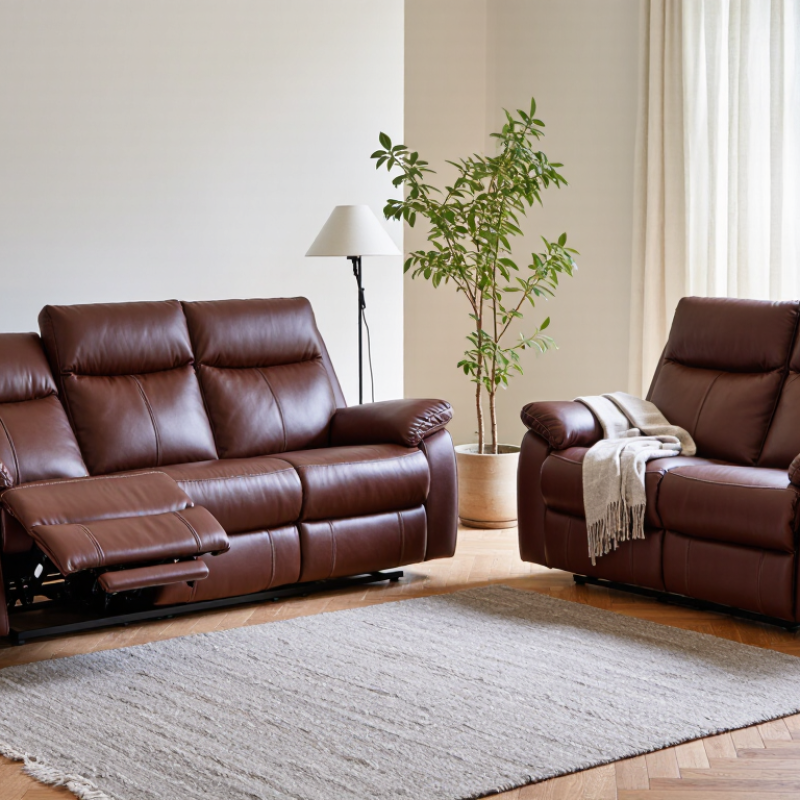
A leather recliner sofa set is a coordinated group of seats upholstered in leather or leather-match material, with reclining sections built into one or more pieces. A typical set may include a sofa and loveseat, or a sofa with a chair. The matching look matters, but the defining feature is the reclining function.
Recliners use a hinged frame to tilt the back and raise a footrest. Some operate with a side lever; others use electric controls. Check how far each seat moves and whether it needs a wall gap. In a small living room, a model that reclines forward can be easier to place. A sofa may look generous in a showroom, then feel crowded beside a coffee table.
“Leather” can describe different materials. Full-grain and top-grain refer to types of hide, while some sets use leather on contact areas and synthetic upholstery elsewhere. Read the material description closely. That detail matters. Leather can develop creases and color variation with use; these changes are not always defects, though they may surprise buyers expecting a uniform finish. A clear definition of the set includes its pieces, upholstery coverage, reclining mechanism, and care needs—not just its polished appearance.
A leather recliner sofa set combines leather-upholstered seating with reclining functionality. Sets may include a sofa, loveseat, and recliner chair, offering different seating capacities.
Typical seating capacity varies by design and model; a sofa commonly seats three, a loveseat two, and a recliner chair one.
Leather changes how a recliner feels against your body. It may feel cool at first, then warm as you sit; its response varies with hide, finish, and room temperature. ISO 11640:2018 tests leather’s resistance to repeated rubbing, but that test cannot tell you whether a sofa feels soft or supportive. A plush surface can still leave your lower back unsupported. Small detail. Check whether the seat keeps your hips back and your feet supported when reclined.
The mechanism matters just as much. A smooth recline lets you adjust the backrest and footrest without a sudden jolt; a poorly matched position can leave a gap behind your waist. BIFMA X5.4-2020 sets repeatable strength, durability, and stability tests for lounge and public seating. Those results offer useful construction evidence, not a promise that every body will feel comfortable. Try the sofa upright and fully reclined, and notice pressure under your thighs and shoulders. I would not judge it by a quick showroom sit alone. Comfort is annoyingly personal.
| Feature | Common Options | Effect on Comfort | Care and Practical Considerations |
|---|---|---|---|
| Leather upholstery | Full-grain, top-grain, split leather, or bonded leather | Natural leather can feel smooth and may soften with use. The feel and breathability vary by leather grade, finish, and room temperature. | Check the product description carefully: these terms refer to different materials and construction. Follow the maker’s care instructions and keep leather away from prolonged direct sunlight and heat. |
| Seat cushioning | Foam, fiber, or foam-and-fiber combinations | Foam density and cushion construction affect support and how quickly a seat regains its shape. Softer cushions may feel plush, while firmer cushions can feel more supportive. | Ask whether cushions are fixed or removable and whether they require occasional turning or fluffing. Comfort depends on both the cushion and the user’s preferences. |
| Manual reclining mechanism | Lever-operated or push-back designs | Allows the backrest and footrest to move without a powered motor. Lever placement and the effort needed to operate it vary by design. | Usually does not require an electrical outlet. Confirm that the controls are easy to reach and that the mechanism moves smoothly. |
| Power reclining mechanism | Electric motor operated by buttons or a control panel | Provides controlled adjustment and can make reclining easier for people who prefer not to operate a manual lever. | Requires access to power. Check cord placement, control accessibility, and whether the model includes features such as a battery backup or USB port; these are not universal. |
| Reclining positions | Fixed-position recline or independently adjustable backrest and footrest | More adjustment can help users find a comfortable position for reading, resting, or watching television. Not every model offers independent controls. | Test the full range of motion when possible. Make sure the footrest supports the legs comfortably and the backrest suits the intended seating posture. |
| Wall clearance | Standard recline or wall-hugger design | A wall-hugger design is intended to recline with less space behind the sofa; the exact clearance depends on the frame and mechanism. | Measure the room and follow the clearance specified for the particular sofa. Also allow space in front for the footrest to extend. |
| Room climate and feel | Leather surface in warm, cool, or variable indoor conditions | Leather can feel cool at first in a cooler room and warm up with body contact. Surface finish and room conditions influence the sensation. | Consider throws or breathable cushions if the surface feels too cool or warm. Avoid placing the sofa beside strong heat sources. |
| Everyday maintenance | Routine dusting and prompt attention to spills | A clean, well-maintained surface helps preserve the sofa’s appearance and comfortable feel. | Use a soft cloth for routine cleaning and a leather-care product only if it is suitable for the upholstery. Avoid harsh cleaners unless the care guide specifically recommends them. |
Note: Materials, dimensions, reclining range, and care requirements vary by sofa. Check the specifications and care guide for the individual model before purchasing.
A leather recliner sofa set can make ordinary downtime more comfortable without changing how a room works. After dinner, one person can lean back to read while another keeps a seat upright for conversation. The recliner’s footrest supports tired legs, and a padded armrest gives you a steady place for a mug or book. Small comforts matter.
Leather is also practical in busy living spaces. Crumbs and everyday spills are usually easier to wipe from its smooth surface than from textured fabric, though prompt cleaning still matters. Dust can collect in seams, so a soft cloth and occasional care suited to the leather help keep the sofa looking its best. Check the recliner’s motion, too; it should open smoothly and leave enough room behind or in front, depending on its design.
There is a trade-off. Leather may feel cool when you first sit down, and direct sunlight can cause fading over time. It can also show scratches, especially in homes with pets. Not every mark disappears. Before choosing a set, consider your room’s temperature, floor space, and daily habits. The right fit is less about appearance alone and more about whether everyone can use it comfortably, day after day.
A leather recliner sofa set can handle years of regular use, but the hide alone does not determine its lifespan. Check the frame, reclining mechanism, stitching, and cushion support. These parts take daily strain. Protected leather usually tolerates spills better than untreated aniline leather, which can absorb oils and develop visible marks. That character is not for everyone. Wipe small spills promptly with a soft cloth, and use a cleaner suited to the leather’s finish. Harsh household cleaners can damage its surface.
The U.S. Environmental Protection Agency reported that Americans generated 12.1 million tons of furniture and furnishings waste in 2018; 9.7 million tons went to landfill. That figure covers all furniture, not leather recliners specifically, but it highlights the cost of short-lived furnishings.
A sofa that can be repaired may stay useful longer. Ask whether the seat cushions, upholstery panels, and reclining parts can be replaced. Also inspect the warranty terms; coverage for the frame may differ from coverage for the mechanism. Leather can scuff, fade near bright windows, and need careful cleaning. It is not maintenance-free. Still, when the frame and moving parts are sound, a well-kept set may offer better long-term value than replacing a cheaper sofa after repeated wear.
A leather recliner set can bring comfortable seating and a coordinated look to a living room. But the right choice depends on how you use the space. Measure the room, including doorways and hallways, before shopping. Recliners need clearance behind or in front, depending on their mechanism. Mark the fully extended footprint with painter’s tape. It makes the space feel real.
Consider who will use each seat and how often. A deep seat may suit taller adults, while a compact model can feel better in a smaller room. Check seat height, arm width, and the ease of operating the recline mechanism. Leather varies in texture and finish, so inspect a sample in daylight if possible. Dark finishes can show dust; lighter ones may reveal spills sooner. It is a trade-off, not a perfect solution.
Tips: Leave a clear path around the set, especially near doors and tables. Ask about cleaning requirements and care instructions before buying. If children or pets share the room, think about everyday wear, not just showroom appearance. Measure twice. Delivery access matters, too. A sofa that fits the floor plan may still be difficult to get through a narrow staircase.
Update your browser to view this website correctly. Update my browser now