What Is a Shower Sprayer and How Does It Work?

A Shower Sprayer is the outlet that turns pressurized water into a directed, usable stream. Inside the showerhead, small openings shape the flow into droplets or jets. The result depends on the sprayer’s design, water pressure, and flow rate. The mechanism is simple. The experience is not always.

The U.S. Environmental Protection Agency’s WaterSense program reports that standard showerheads typically use 2.5 gallons per minute, while WaterSense-labeled models use no more than 2.0. That benchmark helps explain why sprayer design matters: it can affect both water use and the feel of a rinse. Yet a lower flow rate alone cannot guarantee a satisfying shower. Pressure, spray pattern, and mineral buildup also matter. A fine mist may feel gentle; a concentrated jet can feel sharper on the shoulders.

Water-resource expert Dr. Peter Gleick, co-founder of the Pacific Institute, has written extensively about water efficiency. His work offers a useful lens for understanding shower technology: conservation is most practical when it fits everyday needs. This is a paraphrase of his broader research, not a direct quotation about shower sprayers. For readers, the useful question is not merely how a sprayer works, but how its design balances comfort, pressure, and water use. One detail is easy to overlook: even a well-designed sprayer can perform poorly when its nozzles collect mineral deposits.
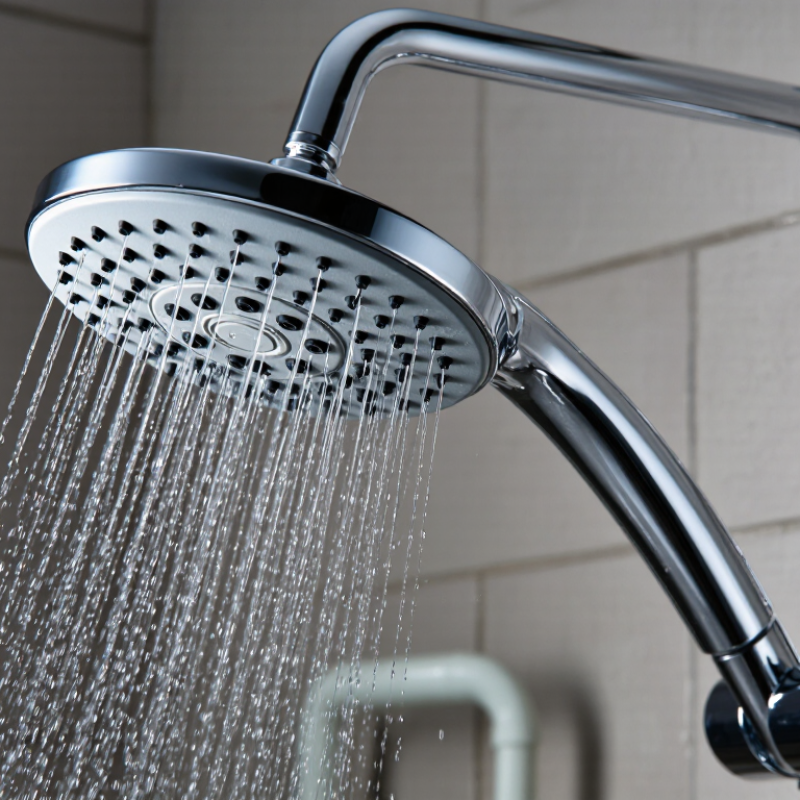
What Is a Shower Sprayer and How Does It Work?

Definition and Main Types of Shower Sprayers

A shower sprayer is the part of a shower system that directs water through small openings toward the user. The term often refers to a handheld showerhead, but it can describe several spray outlets. Water passes through a control valve and then through the sprayer’s nozzles. The shape and number of those openings affect the feel of the stream.

A fixed showerhead stays mounted on the wall or ceiling. It is simple to use, though its angle may not suit everyone. A handheld sprayer connects to a flexible hose and lifts off its holder, making it useful for rinsing hair or washing a tub. Check that the hose reaches comfortably. Combo systems include both a fixed head and a handheld unit, usually with a diverter to direct water between them.

Some showers also use body sprays set into the wall, while rain-style heads spread water over a wider area. These types describe different layouts, not guaranteed pressure levels; flow depends on the plumbing and the sprayer design. Labels can be confusing. A broad spray may feel gentle, but a clogged nozzle can make its pattern uneven.

Key Components: Nozzle, Valve, Hose, and Flow Regulator

A shower sprayer sends water through a compact head, where the nozzle shapes the spray. Small openings create narrow streams, while wider openings produce a softer pattern. Mineral deposits can partly block those openings, making the spray uneven. Small details matter. Rinsing the nozzle gently may help, but abrasive tools can damage its surface. The control valve regulates water supply and temperature before water reaches the sprayer. Some handheld systems also have a shutoff button on the handle; it may reduce flow, but it is not always a substitute for the main valve.

The flexible hose carries water from the wall connection to the handheld head. It needs enough slack to reach comfortably, without sharp bends that restrict flow. Check the connections for drips, especially after moving the sprayer or replacing a washer. A flow regulator limits how much water passes through the assembly. Depending on the system, it may sit inside the head or near the hose connection. A regulator can lower water use, though the spray may feel less forceful. That trade-off is easy to overlook: a neat spray pattern can still feel weak if pressure is low or the nozzle is clogged.

How Water Pressure Creates Spray Through the Nozzle

A shower sprayer turns water from a pipe into separate streams or droplets. Water pressure pushes the flow through narrow internal channels and toward the nozzle plate. Each opening guides water into a particular shape. Small round holes may produce distinct jets, while differently shaped openings can create a broader spray. Fine droplets form as fast-moving water breaks apart after leaving the nozzle. Simple, but not magic.

The spray depends on more than pressure alone. Nozzle size, the sprayer’s internal design, and the flow rate all affect how the water feels on your skin. A strong supply can make jets feel firmer, but a restrictor or partially blocked opening may reduce flow. Mineral buildup can also distort a pattern; one hole might spit sideways while the others run normally. That detail is easy to miss. A quick visual check can reveal uneven streams, though it cannot measure household pressure. Pressure readings and product specifications offer a clearer comparison, and actual spray can still vary with the plumbing.

U.S. Federal Showerhead Flow Limit: 2.5 Gallons per Minute

A shower sprayer directs water through a set of small openings, shaping the spray into a steady stream, broad droplets, or focused jets. In the United States, the federal showerhead flow limit is 2.5 gallons per minute, measured at a test pressure of 80 pounds per square inch. That figure is a ceiling, not a promise that every shower will use exactly that amount. A home’s water pressure, pipe condition, and mineral buildup can all change the flow you feel.

Small details matter. A clogged nozzle may create uneven jets, while a pressure-limiting part can reduce output. The federal limit generally applies to the combined flow from a showerhead, rather than allowing each spray opening to use 2.5 gallons per minute. Actual rules can also vary by location, so check local requirements when replacing a fixture. If the spray feels weak, cleaning the nozzles may help, but it will not fix every plumbing problem. And a high-pressure sensation does not necessarily mean more water is flowing. That distinction is easy to miss.

WaterSense Limit: 2.0 Gallons per Minute and at Least 20% Savings

A shower sprayer is the outlet that turns water from a shower pipe into a usable stream. It may be fixed overhead or attached to a flexible hose. Inside its head, small openings shape the flow into droplets or focused jets. The valve controls how much water reaches the sprayer; the nozzle affects how the stream feels. Simple, but the details matter.

WaterSense-labeled showerheads are limited to 2.0 gallons per minute at standard test pressure and must use at least 20% less water than the 2.5-gallon-per-minute federal baseline. That can reduce water use without making a shower feel weak. Still, flow is not the whole experience. Spray pattern, household water pressure, and a clogged nozzle can change how a shower feels. A lower number on the package does not guarantee comfort in every bathroom; I’ve found that detail easy to overlook.

Tips: Check the flow rate before buying, and look for WaterSense certification rather than relying on a “water-saving” claim alone. Clean mineral buildup from the nozzles if the spray becomes uneven. A quick rinse may help, though it will not fix low household pressure.

Shower Sprayer Flow Rate: WaterSense Limit

A standard showerhead flow rate of 2.5 gallons per minute (gpm) compared with the WaterSense maximum of 2.0 gpm. The 0.5 gpm reduction is 20% less flow.

Your browser is out of date!

Update your browser to view this website correctly. Update my browser now

×