Sourcing Outdoor Xmas Lanterns for 2026 requires more than choosing attractive holiday patterns. Buyers must balance weather resistance, energy use, safety documentation, delivery timing, and retail appeal. The National Retail Federation reported that U.S. holiday sales reached a record $989 billion in 2024, showing the scale of seasonal demand. However, holiday purchasing is increasingly selective. A lantern that looks charming in a product photo may fail after rain, freezing temperatures, or repeated battery changes.
Energy performance also deserves practical attention. The U.S. Department of Energy states that LED bulbs use at least 75% less energy and last up to 25 times longer than incandescent bulbs. That advantage supports LED Outdoor Xmas Lanterns, especially for patios, walkways, and commercial displays. Yet suppliers should not rely on energy claims alone. Ask for test reports, battery specifications, ingress-protection ratings, and destination-market compliance documents. IEC 60529 terminology can help clarify whether an IP rating matches real outdoor exposure. It is not a substitute for product testing.
In our sourcing experience, small details often reveal supplier quality. Inspect the silicone seal, switch cover, hanging loop, and carton drop resistance. Request samples before confirming a large order. Confirm color temperature, timer settings, charging performance, and replacement-part availability. UL Solutions also emphasizes that seasonal decorative products need appropriate safety evaluation for their intended use. Market forecasts differ widely, and that is worth remembering. No report predicts every trend. A thoughtful 2026 sourcing plan should compare factory evidence, independent testing, landed cost, and customer feedback. The cheapest quotation may become the most expensive mistake.
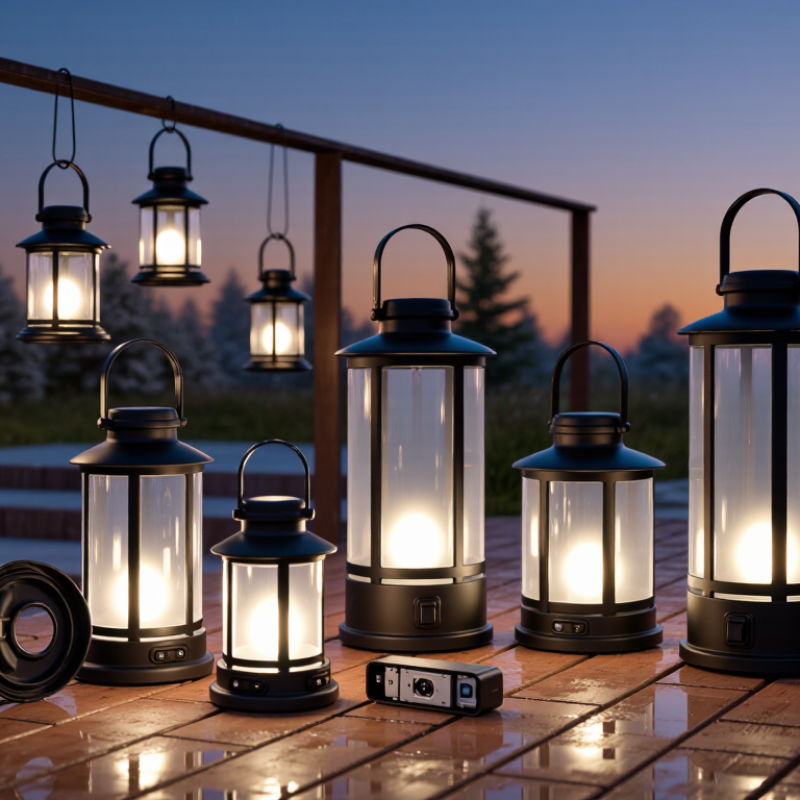
Before requesting quotes, define who will buy the lanterns and where they will be used. A covered porch, a windy garden path, and a snowy storefront need different materials and lighting. Set target retail price, order volume, delivery window, and acceptable defect rate. The National Retail Federation’s 2024 holiday survey found consumers planned to spend an average of $902 on seasonal purchases, including gifts, food, and decorations. That figure is useful context, not a lantern-demand forecast. Avoid treating broad holiday spending as proof that a premium lantern will sell.
Write measurable product goals. Specify dimensions, hanging or ground placement, light color, battery runtime, and the outdoor protection rating required. Ask suppliers for test records covering water exposure, cold performance, and packaging drops. Small details matter: a loose battery door or cloudy lens can ruin a display. For LED-lit designs, the U.S. Department of Energy reports that LEDs use at least 75% less energy and can last up to 25 times longer than incandescent lighting. Use this as a comparison point, not a guarantee for every lantern. Request actual power and lifetime data for the proposed unit. Leave room for a pilot order; samples can reveal flaws that a polished specification misses. We may still underestimate seasonal delays.
This planning benchmark shows a recommended weighting for evaluating outdoor Christmas lantern suppliers in 2026. Product compliance, weather resistance, landed cost, delivery reliability, sustainable packaging, and minimum-order flexibility should be reviewed together before placing an order.
Outdoor Christmas lantern sourcing in 2026 requires more than attractive photographs. Type selection should match the installation site. Hanging lanterns suit porches, while stake lanterns define garden paths. Table lanterns create warmer dining areas. Battery models offer flexibility, but rechargeable units reduce repeated battery waste. Solar lanterns are useful in sunny regions, yet winter clouds can weaken evening brightness.
Material affects durability and appearance. Powder-coated aluminum is lightweight and resists surface corrosion. Stainless steel gives a cleaner, heavier feel. Polycarbonate panels handle impacts better than ordinary glass, although they may scratch. For outdoor use, request documented IP ratings, not vague “weatherproof” claims. IP65 protects against dust and water jets, but it does not guarantee frost performance. Ask suppliers for temperature testing, battery-cycle results, and sample inspections.
Features should serve real seasonal use. Warm LEDs around 2200K–3000K usually create a softer Christmas atmosphere. The U.S. Department of Energy reports that LEDs use at least 75% less energy and last up to 25 times longer than incandescent lighting. Timers, dimming, and replaceable batteries can reduce maintenance. Seasonal designs should remain adaptable: removable snowflake panels, neutral bronze finishes, and interchangeable silhouettes extend selling periods. Grand View Research estimated the global outdoor lighting market at about USD 17.99 billion in 2023, with continued growth forecast through 2030. That growth does not remove sourcing risks. A beautiful sample can still fail after one wet, freezing week.
Supplier evaluation should begin with factory evidence, not attractive catalog photos. Grand View Research estimates the global outdoor lighting market will grow steadily through 2030, driven by LEDs and energy efficiency. That growth attracts capable factories and careless traders. Request production videos, audit records, export references, and a sample from the same production line. Check whether the supplier controls waterproof sealing, wiring, coating, and battery compartments. A polished sample can still hide weak assembly.
Certification must match the destination market and product design. Ask for current test reports covering electrical safety, electromagnetic compatibility, ingress protection, and restricted substances. CE documentation may support European sales, while UKCA may apply in Britain. North American buyers commonly request recognized safety testing. Verify the report number, model number, laboratory, and test date. Do not accept a certificate for a similar lantern. That shortcut creates risk.
Pricing should separate the lantern, packaging, inserts, batteries, tooling, testing, freight, and replacement units. The U.S. Department of Energy reports that LED products can use at least 75% less energy than incandescent lighting, but efficiency does not guarantee durability. Compare landed cost, not factory price. Typical MOQs may range from 500 to 5,000 units, depending on customization and season. Negotiate a pilot order with clear defect limits. My own spreadsheet would include a ten percent contingency. It still might be too optimistic. Price pressure often removes inspection time first. Request staged payments, pre-shipment inspection, and written remedies for failures.
Product samples should answer practical questions before any bulk order. Check brightness, color consistency, timer accuracy, cable flexibility, and water resistance outdoors. Open several units and inspect solder joints, wire insulation, battery contacts, and sealing points. One attractive sample proves very little.
Use accredited laboratories for electrical safety, ingress protection, abnormal operation, and temperature-rise testing. IEC 60598-1 provides widely used requirements for luminaires, while IEC 60529 defines IP protection ratings. Ask for reports linked to the exact model, not a similar product. The U.S. Department of Energy reports that LED lighting uses at least 75% less energy and can last up to 25 times longer than incandescent lighting. That advantage disappears when weak batteries or poor drivers cause early failure.
Factory audits should verify incoming-material records, calibration logs, assembly training, and final inspection rates. Trace three sample units back to production dates and component batches. Request a pre-shipment inspection with photographic evidence. For solar lanterns, test charging under weak winter sunlight, not only in ideal laboratory conditions. For battery models, review overcharge and short-circuit protection. I once trusted a clean audit report too quickly; the first samples looked excellent, yet moisture entered through the cable gland. Quality work is sometimes uncomfortable. Ask what failed last season. Manufacturers that can show corrective actions usually offer more reliable evidence than those claiming zero defects.
How to Source Outdoor Xmas Lanterns in 2026?
Plan Shipping, Compliance, Inventory, and Holiday Delivery Timelines
Source outdoor Christmas lanterns by working backward from the retail delivery date. For December sales, confirm production capacity by June. Leave several weeks for sampling, testing, and corrections. A practical ocean-shipping plan may need eight to twelve weeks. This includes manufacturing, port handling, customs clearance, and inland delivery. Air freight remains useful for urgent replenishment, but its cost can damage seasonal margins.
Request product samples under real conditions. Test brightness, timer functions, water resistance, cable safety, and packaging strength. Ask for current safety reports, material declarations, labels, and user instructions. Requirements vary by destination and product design. Battery-powered lanterns may need additional transport documents and packaging controls. Do not rely on an old certificate. Regulations and marketplace rules can change before 2026.
Inventory planning needs more than a sales estimate. Hold extra units for damaged cartons, inspection failures, and late replenishment. Store cartons on pallets, away from rain and direct sunlight. Add moisture protection when the route includes humid ports. Inspect random cartons before loading, then photograph pallet conditions. A forecast can still be wrong. I would review sales weekly from October and reserve a small emergency quantity. That buffer costs money, but missing the holiday window costs more. Unclear handover dates between suppliers, forwarders, and warehouses can quietly create the largest delay.
Update your browser to view this website correctly. Update my browser now