Top 10 Pipe Cutting Machines for Global Buyers

Choosing a Pipe Cutting Machine is not simply a matter of comparing speed or price. Global buyers must consider pipe diameter, wall thickness, material, cut quality, setup time, and service support. A machine that handles stainless-steel tube cleanly may not suit heavy-wall carbon-steel pipe. The wrong choice can leave burrs, waste material, and slow the next fabrication step. Small details matter.

Automation is also changing fabrication. The International Federation of Robotics reported 541,302 industrial robot installations worldwide in 2023, the second-highest annual total on record. That figure does not measure pipe-cutting machines directly, but it signals growing investment in automated production. Buyers should therefore assess not only cutting performance, but also loading, positioning, software, and integration with existing equipment. A faster cut is not always a faster process.

This Top 10 guide compares machine types and practical buying factors for global buyers, including cutting methods, capacity, accuracy, and operating demands. It also highlights questions worth asking suppliers: Can the machine repeat a cut across a full shift? How quickly can operators change sizes? What support is available after installation? One limitation deserves attention: no source article or verifiable pipe-cutting expert quotation was provided, so this introduction avoids inventing one. A named expert’s words should be checked against a reliable, published source before being quoted.
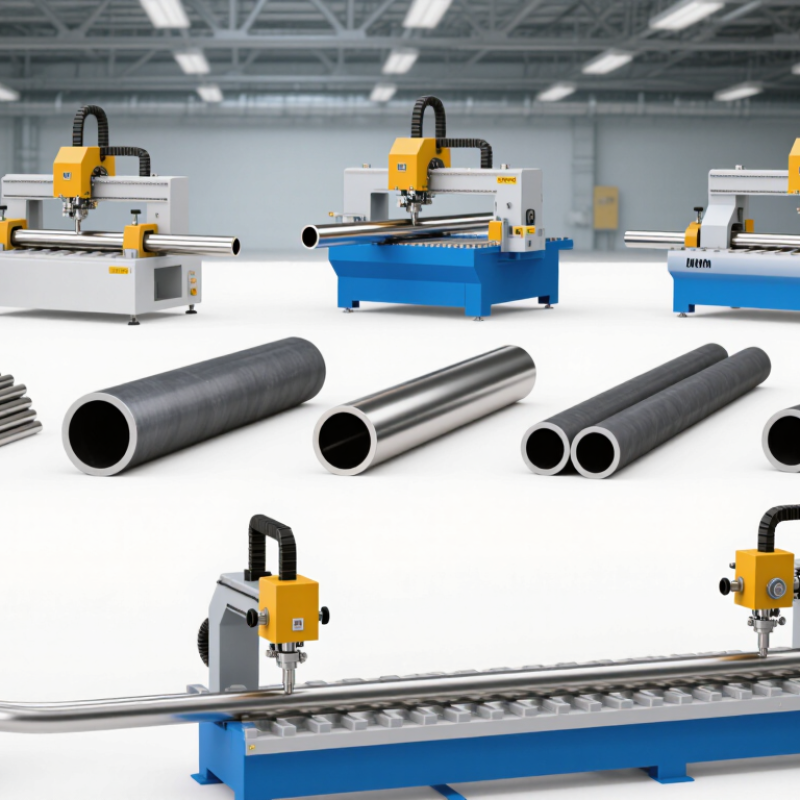
Top 10 Pipe Cutting Machines for Global Buyers

What Pipe Cutting Machines Are and How They Work

Pipe cutting machines divide metal or plastic pipe to specified lengths, helping workshops prepare parts for fabrication, plumbing, and production lines. Their basic task sounds simple. The machine secures the pipe, guides a cutting tool around or through it, and produces an edge ready for inspection or further work. Common cutting methods include circular saws, abrasive wheels, band saws, and thermal processes. The right method depends on pipe material, wall thickness, diameter, and required edge quality.

A typical cycle begins with measuring and positioning the pipe. An operator sets the length, places the pipe against a stop, and tightens the clamp to limit movement. The cutting head then advances at a controlled speed. Keep the pipe stable. A loose clamp can cause vibration, uneven cuts, or tool wear.

After cutting, workers often check length and squareness with a tape measure or a square. Burrs may need removal before the pipe is joined.

Machine controls range from manual handles to programmed feed and automatic loading. More automation can improve repeatability on large batches, but setup still matters. A slightly incorrect stop setting can affect every piece. In real shops, even careful operators occasionally find a cut that needs correction. Buyers should compare capacity, cutting tolerance, available power, and maintenance needs against the actual pipe range they handle. A machine suited to thin tubing may struggle with thick-walled pipe.

Major Types of Pipe Cutting Machines and Their Applications

Pipe-cutting machines differ in how they handle material, wall thickness, and production volume. Abrasive saws use a fast-spinning wheel and suit general workshop cuts on steel pipe. Band saws make steadier cuts, often with less heat, and work well for bundles or thicker sections. Cold saws use toothed blades to leave cleaner ends, useful when parts need accurate fitting or welding. For thin-wall tubing, orbital cutters can produce consistent, square edges with little distortion.

Laser and plasma systems are common choices for shaped cuts, slots, and higher-volume fabrication. Laser cutting offers fine detail on suitable materials, while plasma cutting is often used for conductive metals and larger sections. Manual rotary cutters can be practical for small-diameter pipe on installation jobs. The right choice depends on material, diameter, finish requirements, and output. A machine selected only for speed may create burrs, heat damage, or extra finishing work. I have seen that trade-off overlooked.

Tips: Check the machine’s rated capacity against the pipe’s actual outside diameter and wall thickness. Keep blades sharp, secure the pipe firmly, and inspect a sample cut before full production. Small setup errors matter. Also consider noise, chip removal, and operator access; these details can affect daily use more than expected.

Top 10 Pipe Cutting Machines for Global Buyers

Major machine types compared by typical application fit. Ratings are qualitative guidance, not measured performance specifications.

How to read: Each category is rated from 1 (limited fit) to 5 (strong fit) for field work, clean-cut potential, and complex-profile capability. Actual results depend on material, pipe diameter, wall thickness, tooling, and machine configuration. Cold-cutting tools are commonly chosen where heat-affected zones should be minimized; plasma and oxy-fuel are commonly used for thermal cutting of steel; laser and waterjet systems are used for precision cutting in suitable production setups.

Key Factors Global Buyers Should Consider Before Purchasing

When comparing pipe cutting machines, begin with the work you actually handle. Record the pipe’s material, outside diameter, wall thickness, and daily cutting volume. A machine suited to thin stainless steel may struggle with thick carbon steel. Check the stated capacity against your largest routine job, not just an occasional maximum. Leave room for variation.

Cut quality matters as much as speed. Ask for sample cuts on your own material, then inspect the edge, burrs, and dimensional consistency. Consider whether you need a straight, bevel, or orbital cut, and what setup each requires. Small differences become costly across repeated production runs. Also check blade or tool availability, changeover time, and routine maintenance needs. A fast machine is less useful when replacement parts take weeks to arrive.

Before purchasing, confirm the required power supply, floor space, operator training, and guarding. Request clear specifications, operating instructions, warranty terms, and details about local technical support. For overseas delivery, clarify packing, installation assistance, and spare-parts shipping. A neat brochure cannot prove dependable service. I would compare total ownership costs, not just purchase prices; still, estimates may miss downtime or unexpected maintenance. Ask practical questions before committing.

Top 10 Pipe Cutting Machines for Global Buyers

For global buyers, the best pipe cutting machine depends on the material, production volume, and available workshop space. A practical shortlist may include manual saws, band saws, cold saws, abrasive cutters, and CNC laser or plasma systems. Each suits different jobs. A compact cold saw can make clean cuts on steel tube, while a CNC system handles repeated profiles with less manual measuring. Check the machine’s supported diameter, wall thickness, cutting angle, and stated tolerance before comparing prices.

Import conditions matter too. Confirm electrical requirements, guarding, extraction needs, spare-part availability, and whether manuals and operator training are accessible in your preferred language. Ask suppliers for sample cuts using your actual pipe material; a polished brochure cannot confirm edge quality or cycle time. Shipping and installation can also affect the real purchase cost. Small details add up.

Tips: Measure your most common pipes, then keep a few offcuts for sample testing. Compare burrs, squareness, and setup time. Be cautious with unusually broad performance claims. One trade-off is easy to miss: a faster machine may need more space, power, or maintenance than your shop can support. A careful comparison beats choosing by cutting speed alone.

Operating, Maintaining, and Safely Using Pipe Cutting Machines

Top 10 Pipe Cutting Machines for Global Buyers

Operating, Maintaining, and Safely Using Pipe Cutting Machines

Safe cutting starts before the motor turns. Check that the pipe is supported and clamped firmly, then mark the cut where the blade can reach without forcing it. Match the blade and cutting speed to the pipe material. Keep hands clear of the cutting path, and wait until the blade stops before removing offcuts. A rushed setup can leave a crooked edge—or worse, a moving workpiece.

Maintenance is practical risk control, not cosmetic care. Inspect guards, cables, clamps, and blades before each shift; replace cracked or blunt parts rather than compensating with extra pressure. Disconnect power before cleaning or adjustments, and follow the machine’s manual for lubrication and blade changes. The U.S. Bureau of Labor Statistics reported a 2.8 recordable-injury-and-illness rate per 100 full-time workers in manufacturing in 2023. That figure covers the sector, not pipe cutting alone, but it underscores why routine checks matter. Some inspection steps feel repetitive. Keep doing them.

Tips: Clear chips with a brush, not bare fingers. Wear eye protection and hearing protection suited to the task. After a test cut, inspect the edge for burrs and confirm the pipe stayed secure. If vibration changes suddenly, stop and investigate before cutting again.

Top 10 Pipe Cutting Machines for Global Buyers - Operating, Maintaining, and Safely Using Pipe Cutting Machines
No. Machine Type Typical Applications Suitable Materials Typical Cutting Range Operating Guidance Routine Maintenance Key Safety Practices
1 Manual ratchet pipe cutter Small plumbing repairs and on-site work where power is unavailable Primarily plastic pipe, including common PVC and similar materials; check cutter compatibility Usually small-diameter pipe; capacity depends on the cutter and pipe wall thickness Mark the cut, keep the pipe square, and advance the blade gradually without forcing it. Clean the blade and ratchet, inspect the cutting edge, and lubricate moving joints as directed by the manufacturer. Wear eye protection, keep fingers clear of the blade, and secure the pipe before cutting.
2 Portable circular saw with pipe-cutting guide Field fabrication, construction, and general-purpose straight cuts Steel, stainless steel, aluminum, or plastic when fitted with a suitable blade Varies with saw size, blade diameter, guide design, and pipe wall thickness Use a compatible blade and guide; clamp the work and make a controlled cut without twisting the saw. Check the blade for damage, clean the guard and vents, and inspect the power cord or battery connections. Wear eye and hearing protection; keep the guard functional and control sparks and hot chips.
3 Portable cold-cut pipe saw On-site metal pipe cutting where reduced heat and a clean, square end are beneficial Commonly carbon steel and stainless steel, subject to the machine and blade specifications Capacity is model-specific and depends on pipe outside diameter and wall thickness Align and clamp the pipe, select the correct blade and feed rate, and let the blade complete the cut steadily. Inspect blade condition and clamping components; remove chips and service the drive according to the manual. Use eye and hearing protection, keep hands away from the cutting zone, and wait for the blade to stop before adjustments.
4 Stationary abrasive chop saw Workshop cutting of metal pipe and structural sections Ferrous metals and other materials only when approved for the abrasive wheel Limited by wheel diameter, vise opening, and the pipe profile Secure the pipe in the vise, use the correct wheel, and apply steady pressure without side-loading the wheel. Check the wheel for cracks or damage before use; keep the vise, guards, and spark deflector in good condition. Wear eye and face protection, hearing protection, and suitable clothing; direct sparks away from people and flammables.
5 Portable band saw Installation, maintenance, and workshop cutting of metal pipe Carbon steel, stainless steel, and non-ferrous metals with an appropriate blade Depends on throat capacity, blade size, and whether the cut is round or bundled material Support the pipe on both sides, choose the correct tooth pitch, and maintain a smooth, even feed. Inspect blade tension and condition, clean the guides, and keep the work support and clamps aligned. Keep hands clear of the blade path, secure the work, and disconnect power before changing the blade.
6 Stationary band saw with pipe vise Production workshops requiring repeatable cuts across a range of pipe sizes Metal pipe, including common steel and aluminum alloys, with a suitable blade Set by the saw's capacity and vise; confirm the maximum diameter and wall thickness in the manual Clamp the pipe firmly, set the blade speed for the material, and use the recommended feed and coolant where applicable. Check blade tracking, tension, guides, coolant level, and vise alignment; remove accumulated chips. Keep guards closed during operation, use eye protection, and isolate the machine before servicing.
7 Orbital pipe saw Precise, square cuts for process piping and preparation for orbital welding Commonly stainless steel and other metals supported by the tooling and machine setup Capacity is determined by the clamping head, cutting head, and pipe wall thickness Center the tool, clamp it without deforming thin-wall pipe, and use the specified blade and feed settings. Clean the clamping surfaces, inspect the blade and guides, and check alignment and electrical connections. Wear eye protection, secure the machine before starting, and keep hands clear of the rotating cutting head.
8 Pipe beveling and cutting machine Pipe-end preparation for welding, including cutting and beveling in one setup Steel and stainless steel; other materials require compatible tooling Depends on the machine's clamping range, tooling, and pipe wall thickness Center and clamp the pipe, set the required bevel geometry, and verify the setup on a test piece when practical. Inspect cutting inserts, clamps, and feed mechanisms; remove chips and lubricate as specified. Use the guards and recommended PPE; stop and isolate the machine before changing inserts or clearing chips.
9 CNC pipe profile cutting machine Repeatable cutting of complex profiles, branches, and intersecting pipe joints Metal pipe and tube compatible with the installed cutting process and tooling Set by the machine bed, chuck, cutting head, and material-handling system Verify the program, material dimensions, workholding, and cutting parameters before running the job. Maintain rails, chucks, sensors, extraction equipment, and software backups according to the service schedule. Use enclosure interlocks, extraction, and trained operators; never bypass safeguards or enter the work zone during a cycle.
10 Laser pipe cutting machine High-precision production of tube components, slots, holes, and complex profiles Materials supported by the laser source and process setup, commonly steel and stainless steel Limited by the chuck, machine bed, laser power, material, and wall thickness Load the correct material program, confirm clamping and assist-gas settings, and run only within approved process limits. Follow the service plan for optics, filters, gas supply, chiller, extraction, and machine calibration. Operate with the rated enclosure and interlocks; control laser access, fumes, fire risk, and assist-gas hazards.

Selection note: Cutting capacity, material compatibility, accuracy, and operating requirements vary by machine design, tooling, pipe dimensions, and manufacturer specifications. Confirm the machine manual and local safety requirements before purchase or use.

Your browser is out of date!

Update your browser to view this website correctly. Update my browser now

×