In 2026, choosing an Amart Coffee Table is less about chasing a trend and more about matching the table to everyday life. A compact apartment may benefit from nesting tables that tuck neatly beside a sofa. A family living room might need closed storage for remotes, books, and children’s toys. William Morris, the British designer, offered a useful design principle: “Have nothing in your houses that you do not know to be useful, or believe to be beautiful.” It is a sensible test for a coffee table, too. Looks matter. So does what happens on a busy Tuesday.
This guide explores popular types, including round tables for softer circulation, glass designs that keep a room feeling open, and lift-top models that provide extra function. Timber finishes can bring warmth, while nesting pairs offer flexibility when guests arrive. Small details count: measure the gap between your sofa and table, check the tabletop height, and picture where a drink or laptop will actually sit. A polished product photo cannot answer every practical question. Nor can a single “best” pick suit every home. We’ll compare the strengths and trade-offs of each type, so you can narrow the options with clearer expectations. A little doubt is useful. It encourages better choices.
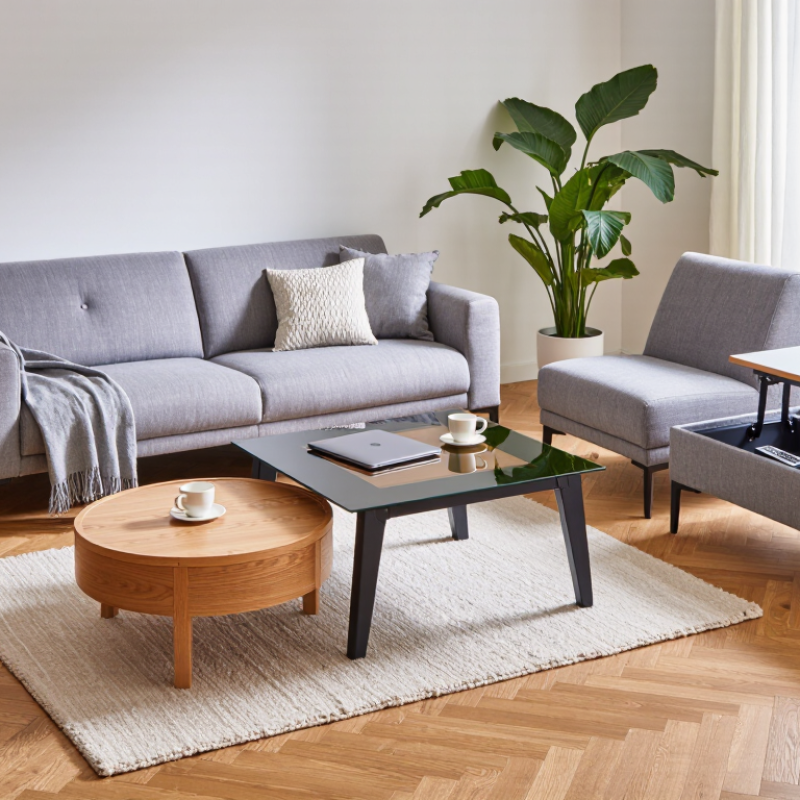
In 2026, a coffee table is defined less by one fashionable shape than by how well it supports daily life. A useful design balances footprint, surface area, materials, and access to storage. Measure the sofa first: the table usually works best at about two-thirds its length, with comfortable walking space around it. Small details matter. Rounded corners can soften tight walkways, while a lower shelf keeps remotes and magazines close without crowding the top.
Material choice shapes both appearance and upkeep. Solid wood can develop marks that add character, but it may need gentle cleaners and protection from standing water. Tempered glass keeps a small room visually open, though fingerprints show quickly. Metal frames feel light and sturdy; check joints and floor-contact points for wobble or scratches. A finish should suit the household, not just the showroom lighting.
Storage is another defining feature, but more compartments are not always better. Lift-top designs can create a handy work surface, yet their hinges need smooth, controlled movement. Open shelves make items easy to reach, while drawers hide visual clutter. Before choosing, check table height against the sofa seat and consider how people actually move through the room. Measure twice. A beautiful table that blocks the path is still the wrong fit.
Available coffee-table types include rectangular, square, round, oval, nesting, lift-top, and storage designs. Rectangular tables suit long sofas and keep remotes or books within easy reach. Round and oval shapes soften tight walkways, with no sharp corners to catch a passing knee. Nesting tables tuck together when floor space matters, then separate for snacks or guests. Small rooms benefit. Their lighter frames can wobble, though, so check the joints and tabletop stability before buying.
Storage tables hide blankets, board games, or charging cables; lift-top versions bring a surface closer for laptop use. Glass tops keep a room visually open, while solid wood and metal often feel more substantial. Grand View Research’s 2024 global furniture-market analysis estimated the market at about US$736.6 billion in 2023. That figure covers furniture broadly, not coffee tables alone, so it cannot identify a best-selling table type. The U.S. Environmental Protection Agency recorded 12.1 million tons of furniture and furnishings waste in 2018. That makes repairable construction worth considering: inspect the finish, hinges, and replaceable parts, not just the silhouette. A beautiful table may still be awkward if its height does not align with the sofa.
Coffee table styles differ most in their materials, proportions, and everyday function. Timber designs bring visible grain and a warmer feel to a room. Solid wood can be heavy, while veneer over engineered board often keeps the price and weight lower. Check the edges and underside, not only the top surface. Small details reveal a lot.
Glass-top tables make compact rooms feel more open because light passes through them. They also show fingerprints quickly, and sharp corners may not suit every household.
Metal frames add a crisp, industrial look and can support slim profiles. Still, thin legs may feel less steady on uneven flooring. A little wobble matters.
Storage-focused designs include drawers, shelves, and lift-up tops. Drawers hide remotes and coasters; open shelves keep books within reach but collect dust. Nesting tables offer flexible surface space, though smaller pieces can drift out of place. For a narrow living room, measure the walking route as well as the table footprint. There is no perfect pick: a striking finish may ask for more cleaning, and practical storage can make a table look visually heavier. Try to balance what you like with what you will actually use.
The right coffee table should solve a room’s daily problems, not just fill an empty spot. A compact living room may benefit from nesting tables that tuck away when guests leave. In a family space, a rounded table reduces sharp corners, while a lift-top design creates a handy surface for working or eating. Measure the sofa first: a table around the same height as the seat, or slightly lower, is usually comfortable to reach. Leave enough clearance for knees and walking paths.
Tips: Tape the table’s outline on the floor before buying. Try opening drawers or lifting the top in that space. It can still feel crowded once toys, baskets, and people return.
Room choices also reflect wider renovation priorities. Harvard’s Joint Center for Housing Studies projected U.S. home-improvement and repair spending would reach $509 billion in 2025, in its Leading Indicator of Remodeling Activity. That figure covers more than furniture, but it signals how much homeowners invest in making rooms work better. For small spaces, prioritize storage and a light visual footprint; for larger rooms, a sturdy rectangular table can anchor seating. Open shelves look useful, yet they collect clutter quickly. Be honest about what you will maintain.
| Coffee Table Type | Best Suited To | Useful Features | Practical Considerations | Sizing Guidance |
|---|---|---|---|---|
| Lift-Top | Small living rooms, apartments, and multipurpose spaces | A raised surface can support working or dining from the sofa; some designs include concealed storage. | Check the lifting mechanism and make sure the raised top has enough clearance from the sofa and nearby seats. | Choose a top that fits the available floor area when closed and remains reachable when raised. |
| Storage Table | Family rooms and spaces where remotes, books, or toys need a home | Drawers, shelves, or a lift-up compartment help keep everyday items within reach and out of sight. | Drawers need room to open; open shelves are easy to access but keep contents visible and may collect dust. | Measure the table and the clearance needed to open drawers or access compartments. |
| Nesting Tables | Compact rooms, flexible seating areas, and homes that occasionally need extra surfaces | Smaller tables tuck beneath a larger one and can be separated when guests need additional surfaces. | Confirm that the nested pieces can be pulled out without obstructing walkways or seating. | Compare the footprint of the nested set with the space available when all pieces are in use. |
| Round or Oval | Rooms with tight walkways, children, or curved furniture arrangements | Curved edges provide no sharp corners and can make it easier to move around the table. | Check that the surface is large enough for the household’s usual drinks, books, and serving needs. | Measure the widest point and leave comfortable walking space around the table. |
| Rectangular | Long rooms and sofas with a broad seating span | A long top offers useful surface area for several people and aligns naturally with many sofas. | Its corners and longer footprint may be less suitable for narrow circulation paths. | A common design guideline is to choose a table about two-thirds the length of the sofa. |
| Ottoman-Style | Lounging-focused living rooms and homes that value soft, flexible seating | Upholstered tops can serve as a footrest or extra seat; a firm tray can provide a stable surface for drinks. | Soft surfaces are less stable than hard tabletops, and upholstery may require more care after spills. | Check that the height works with the sofa and that there is space to move around its edges. |
| Glass-Top | Rooms where a visually light appearance is preferred | Transparent surfaces allow more of the floor and rug to remain visible, which can help a room feel less visually crowded. | Glass shows fingerprints and requires regular cleaning; inspect the edges and construction for household suitability. | Choose a footprint that preserves clear routes through the room; consider rounded corners in busy spaces. |
| Solid-Wood | Everyday family spaces and interiors that benefit from a durable, substantial surface | A hard-wearing surface suits regular use, and natural grain gives each piece a distinct appearance. | Wood can scratch or mark; care needs vary by finish, so follow the maker’s cleaning instructions. | Compare the table’s visual scale and weight with the sofa and available floor space. |
| Narrow Console-Style | Small seating zones or rooms where a standard-depth table blocks movement | A slim profile can provide a surface for essentials while taking up less floor depth. | It offers less room for serving or spreading out items than a conventional coffee table. | Measure the usable depth and keep the main route between seating and other areas clear. |
General fit tip: Measure the sofa, table footprint, and walking routes before buying. A commonly used guideline is to keep the coffee table close to sofa-seat height and leave roughly 30–45 cm (12–18 in) between the table and seating, adjusting to suit the room and household.
Choosing the right Amart coffee table begins with how you use your living room, not just its style. Measure the sofa, walking paths, and available floor space before comparing shapes. A table around two-thirds of the sofa’s length usually looks balanced. Leave roughly 14–18 inches between the table and seating for comfortable movement. Round tables soften tight layouts, while nesting tables provide flexible surface space. Lift-top and storage designs suit rooms where the table also holds blankets, books, or a laptop.
Durability matters, too. In its 2024 U.S. Houzz & Home Study, Houzz reported a median home-renovation spend of $24,000 in 2023. That figure covers renovations broadly, not coffee tables, but it highlights the value of planning purchases carefully. Compare materials, edge finish, stability, and cleaning needs against your budget. Solid wood can show scratches; glass may reveal fingerprints. I would recheck measurements after moving furniture, since even a careful first estimate can miss a narrow walkway.
Tips: Measure from the sofa’s front edge, then mark the table footprint with painter’s tape. Sit down and test the reach. If you keep bumping your knees, reconsider the size or shape. A little doubt before checkout is useful.
Update your browser to view this website correctly. Update my browser now