Choosing among China’s top TV enclosure cabinet suppliers takes more than comparing prices or polished product photos. A dependable Tv Enclosure Cabinet must protect the screen while managing heat, moisture, glare, and everyday access to controls. Look closely at cabinet materials, sealing details, ventilation design, mounting options, and the quality of hinges and locks. Small details matter. A poorly placed vent can admit rain; a dark front panel may reflect a bright patio.
For this guide, enclosure design consultant Daniel Wu offers a practical principle: “A cabinet succeeds when protection, airflow, and viewing comfort work together—not when any one feature dominates.” Use that idea to assess suppliers’ technical documentation, customization process, sample inspection options, and after-sales support. Ask for clear specifications, including screen-size compatibility and environmental test conditions. A confident sales claim is not the same as verifiable test evidence.
The suppliers compared here serve different needs, from straightforward indoor installations to demanding outdoor settings. Some may excel at tailored dimensions; others may offer stronger production capacity or clearer quality controls. No single supplier is right for every project. Even a well-made cabinet needs correct installation and suitable site planning. This overview is a starting point, not a substitute for checking current product data, references, and sample quality before placing an order.
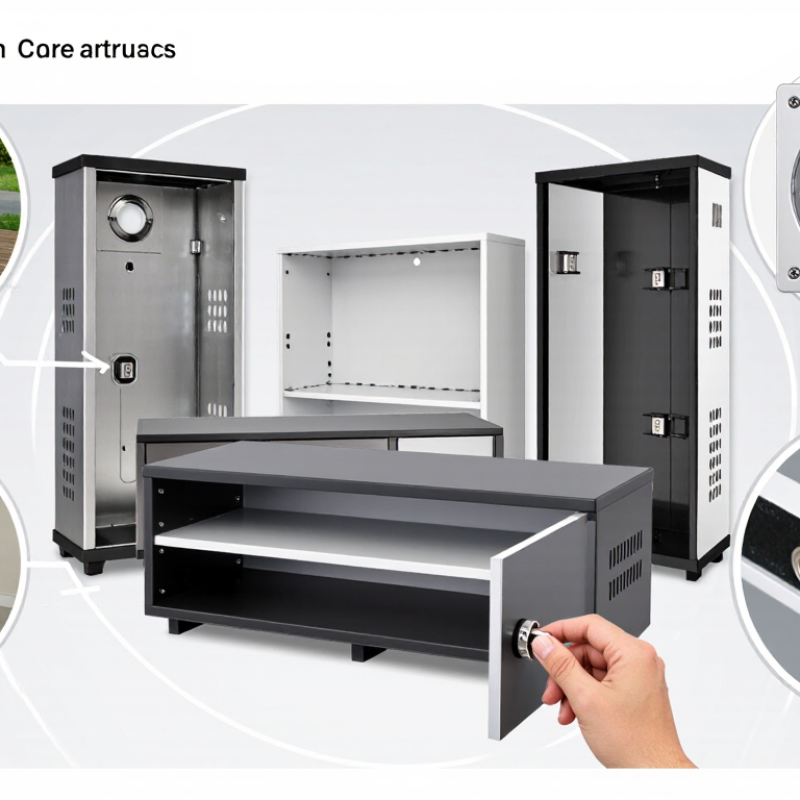
A TV enclosure cabinet is a protective housing designed to keep a television operating in challenging environments. It typically combines a rigid frame, a transparent viewing panel, mounting hardware, and protected cable openings. Some models include ventilation fans, filters, or temperature controls. The right setup depends on the display, surrounding conditions, and expected use. A sealed cabinet is not automatically waterproof. That distinction matters.
These enclosures are used in factories, workshops, restaurants, public waiting areas, and outdoor signage installations. In a workshop, a cabinet can help shield a screen from dust and accidental bumps. Outdoors, it may need protection from rain, sunlight, and temperature changes. Check the enclosure’s environmental ratings and ventilation design before choosing one. Poor airflow can cause heat buildup, even when the cabinet appears sturdy. Measurements matter, too: allow room for connectors and maintenance access.
A reliable assessment starts with the cabinet’s actual environment. Ask for drawings that show dimensions, mounting points, cable access, and ventilation openings. Check the specified material thickness against the cabinet’s weight and expected use. A polished product photo proves very little.
Request a sample or inspect a production unit. Look closely at door alignment, hinge movement, welds, coating consistency, and sharp edges. Ask how the supplier verifies weather or dust protection, and request test records that match the exact model. Confirm how heat is managed around the screen and internal electronics. Small details matter.
Review quality controls beyond one sample. Ask how incoming materials, finished dimensions, and packing are checked for each batch. Confirm drawing revision control, lead times, spare-part availability, and protective packaging for transport. Compare quotations line by line; a low price may omit installation hardware or testing. Verify certificates directly and check that their scope covers the product in question. A checklist helps, but it can also create false confidence. Clear answers are useful; documented answers are better. If a supplier cannot explain a specification plainly, pause and investigate before committing.
Who Are the China Top TV Enclosure Cabinet Suppliers?
Leading TV Enclosure Cabinet Suppliers in China
China’s leading TV enclosure cabinet suppliers are distinguished by engineering support, consistent fabrication, and practical customization. Their cabinets may protect outdoor televisions or commercial displays from rain, dust, heat, and accidental impact. Grand View Research valued the global digital signage market at USD 28.8 billion in 2023 and projected an 8.1% compound annual growth rate from 2024 to 2030. This is not a cabinet-market estimate, but it indicates continuing demand for protected display equipment. Buyers should ask suppliers how site conditions affect material thickness, seals, ventilation, and mounting.
Reliable suppliers can provide dimensioned drawings, finish details, inspection records, and clear answers about production tolerances. Check sample welds and door alignment; small gaps can matter outdoors. Ask how cable entries are sealed and how heat escapes when a screen runs for hours. A polished product photo is useful, but it cannot replace a sample inspection. Fit matters.
Tips: Share the screen dimensions, installation location, and expected operating hours before requesting a quote. Confirm the enclosure’s stated ingress rating and ask what testing supports it. Compare lead time, spare-part availability, and packaging—not price alone. One limitation remains: supplier documents may not reflect every installation condition, so validate the design against your actual site.
A practical enclosure specification to compare is water-ingress protection. The chart summarizes IEC 60529 water-protection code levels—without ranking or naming suppliers.
The IPX number identifies a standardized test category, not a linear performance score. Immersion ratings IPX7 and IPX8 do not automatically indicate that an enclosure has passed water-jet tests; check the exact rating required for the installation.
China’s TV enclosure cabinet suppliers differ in engineering depth, production control, and support for custom projects. A capable supplier should review screen size, mounting points, operating temperature, and service access before quoting. Steel offers sturdy, cost-conscious construction, while aluminum reduces weight and resists corrosion. Stainless steel may suit demanding or frequently cleaned environments, but it can raise material costs.
For indoor installations, powder-coated panels and clean cable openings often provide a practical finish. Outdoor cabinets need closer attention to seals, drainage, sun exposure, and heat removal. Ventilation fans can help, but filters need regular cleaning. Small details matter. Ask whether protection ratings apply to the finished cabinet, not just individual parts, and request test records where available.
Customization may include cabinet dimensions, VESA patterns, lockable doors, hinges, viewing windows, and cutouts for power or signal cables. Share drawings and the actual installation conditions; photographs of the mounting location can reveal awkward clearances. A sample unit can uncover fit problems before a larger order. Still, custom features add cost and production time. A polished drawing can miss a service issue, so review how technicians will open, clean, and repair the enclosure. Not every option is worth keeping.
Use this comparison as a practical supplier-evaluation guide. It describes common capabilities and options in the TV enclosure cabinet market; availability varies by manufacturer, design, and order requirements.
| Supplier capability area | Common offering | Materials and processes | Customization options | What to verify |
|---|---|---|---|---|
| Sheet-metal enclosure fabrication | Cabinets and housings made to drawing or supplied in standard configurations | Typically steel or stainless-steel sheet; laser cutting, punching, bending, welding, and finishing may be available | Dimensions, cut-outs, mounting points, doors, vents, and cable-entry locations | Material grade and thickness, drawing tolerances, weld quality, and sample approval process |
| Indoor TV cabinet production | Enclosures for commercial displays in offices, retail, education, and public areas | Painted or powder-coated steel and aluminum are common choices; transparent panels may use glass or polycarbonate | Screen opening, bezel, finish color, access door, ventilation, and internal brackets | Display size and mounting compatibility, airflow requirements, finish durability, and service access |
| Outdoor and weather-resistant enclosures | Cabinets designed to protect displays from environmental exposure | Often fabricated from coated steel or stainless steel; seals, gaskets, and protective glazing may be incorporated | Sunshades, sealed cable glands, locks, drainage features, and climate-management provisions | Ask for test reports for the specific complete enclosure and configuration; verify ingress protection, corrosion resistance, and operating-temperature limits |
| Thermal-management integration | Cabinet layouts that support heat removal from the display and installed electronics | Vents, fans, filters, heat exchangers, or air-conditioning components may be specified according to the design | Vent position, fan capacity, filter access, and component layout | Request thermal assumptions and test conditions; check noise, maintenance access, and condensation control where relevant |
| Display mounting and service access | Internal supports and access features to secure and maintain the display | Metal brackets, rails, fasteners, hinges, and locking hardware are commonly used | VESA-compatible or drawing-based mounting, removable panels, hinged doors, and lock options | Confirm display weight, mounting pattern, clearances, fastener access, and replacement procedure |
| Finishing and branding preparation | Surface finishing and provisions for project-specific identification | Powder coating, wet paint, brushed metal finishes, and applied labels are possible depending on material and process | Color selection, texture, logo area, labels, and warning markings | Approve a finish sample; specify color reference, surface preparation, and packaging protection |
| Engineering and OEM/ODM support | Design review, drawing development, prototyping, and production against agreed specifications | Capabilities depend on the supplier’s engineering team, tooling, and production equipment | Custom dimensions, prototypes, material selection, assembly, and project-specific packaging | Review drawings, revision control, prototype approval, quality checks, lead times, and ownership of design files |
Before selecting a supplier, compare quotations against the same drawings, material specifications, finish requirements, environmental conditions, inspection criteria, and delivery terms.
Evaluating China-based TV enclosure cabinet suppliers starts with evidence, not polished catalogs. Request drawings, material grades, bend tolerances, weld samples, coating thickness, and inspection records for one specific model. Then compare like with like. Measure a sample cabinet against its drawing, checking mounting-hole positions, door gaps, and sharp edges. Small mismatches can complicate installation.
ISO’s ISO Survey 2022 reported 1,265,216 ISO 9001 certificates across 189 countries and economies. That scale makes certificate verification essential; certification alone does not prove a supplier’s current production quality. Confirm the certificate’s scope, issuing body, and validity, then match it to the factory address. Ask for recent inspection reports and traceable material certificates. One awkward detail: paperwork may describe a process better than the shop floor does.
The World Bank’s 2023 Logistics Performance Index assesses six dimensions, including tracking and timeliness. Use it as country-level context, not as a rating of an individual factory. For each shortlisted supplier, compare lead-time records, packaging photos, sample test results, and responses to corrective-action requests. Ask how the cabinet performs under the specified load and operating temperature. If claims lack measurable limits, request written criteria before ordering. A factory visit helps, but even a neat production line cannot replace a tested sample.
Update your browser to view this website correctly. Update my browser now