Choosing among the top Spa Chiller manufacturers is rarely a simple price comparison. Global buyers must assess cooling performance, water quality control, energy use, and long-term service support. A reliable Spa Chiller should maintain stable temperatures during busy operating hours, not only during showroom demonstrations.
This guide examines manufacturers through practical purchasing criteria. These include compressor efficiency, titanium heat exchangers, controller accuracy, noise levels, and climate compatibility. A unit installed beside an outdoor spa may face dust, humidity, salt exposure, and limited ventilation. Those conditions can change performance significantly. Factory test data matters, but field experience matters too.
Supplier credibility deserves equal attention. Buyers should review documented quality systems, warranty terms, spare-parts availability, installation guidance, and response times. References from hotels, wellness centers, and residential projects can reveal weaknesses that brochures often hide. No ranking is flawless. Market information changes, and some manufacturers disclose more technical evidence than others. That limitation should remain visible.
The following overview compares leading Spa Chiller manufacturers for international purchasers. It focuses on engineering capability, product consistency, customization, energy performance, and after-sales reliability. Readers should still verify certifications, local service arrangements, electrical compatibility, and shipping requirements before ordering. A cheaper unit may become expensive when replacement parts arrive slowly or technicians lack training. Practical evidence should guide the final decision, not impressive marketing language alone.
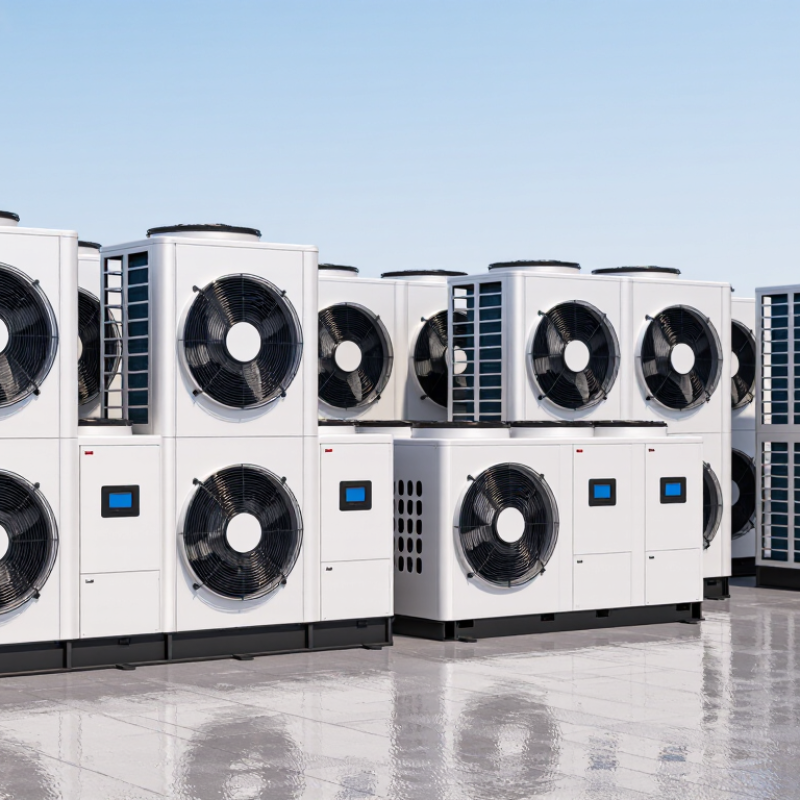
A reliable spa chiller manufacturer starts with verifiable engineering, not polished catalog images. In field purchasing, I examine cooling capacity at the actual spa water temperature and outdoor ambient. A unit rated at 35°C may perform differently beside a sun-heated pool. Clear performance curves matter. So does the stated flow rate. Ask for compressor details, heat exchanger material, refrigerant information, and electrical limits. Vague answers create expensive surprises.
Manufacturing discipline is visible in small details. Look for pressure testing, electrical safety checks, leak inspection, and documented factory acceptance procedures. The control panel should show water temperature, alarms, and restart status without forcing guesswork. Stainless steel or coated components need a stated corrosion strategy. Noise data should include measuring conditions. Otherwise, “quiet” means very little. A dependable manufacturer also supplies wiring diagrams, installation guidance, spare-part lists, and traceable serial records.
After-sales support separates a capable factory from a temporary seller. Confirm response times, remote troubleshooting, technician training, warranty boundaries, and parts availability in your market. Request references from comparable spa installations, not only large commercial projects. I have seen good equipment underperform because installers ignored flow protection and ventilation. That is not entirely the manufacturer’s fault, but unclear instructions deserve criticism. No supplier gets every detail right. A reliable one admits limitations, updates documents, and helps correct them before a warm, crowded spa exposes the weakness.
When comparing spa chiller systems, start with cooling capacity, not cabinet size. A unit must match the spa’s water volume, heat gain, and target temperature. Ask for performance data at your local air temperature. A chiller rated at mild conditions may struggle beside a sunny outdoor spa. Temperature stability matters too. Commercial users often need control within a narrow range, such as 10–15°C. Small fluctuations can affect comfort and operating schedules.
Check flow requirements carefully. The pump, filter, and chiller must work together without excessive pressure loss. A clear flow meter helps technicians identify restrictions during commissioning. Titanium or corrosion-resistant heat exchangers are valuable for treated water environments. Confirm compatibility with salt, chlorine, and cleaning chemicals. Refrigerant type, electrical voltage, and noise output also deserve attention. A quiet system can matter near treatment rooms. It is easy to overlook this detail.
Energy performance should be compared under matching test conditions. Look for variable-speed controls, insulated water lines, and accessible filters. Remote monitoring can show temperature, alarms, and running hours, but only when the connection remains reliable. Ask manufacturers for installation drawings, spare-parts lists, service intervals, and warranty terms. Regional technical support is useful for global buyers. Documentation should be clear, translated where necessary, and supported by recognized safety certifications.
Real-world testing often reveals gaps in catalog specifications. In one installation, the selected chiller had enough capacity but inadequate water flow. The result was unstable cooling. That mistake was avoidable. Leave space for ventilation and maintenance access. A lower purchase price can become expensive when technicians cannot reach the filter or controller.
Top Spa Chiller Manufacturers for Global Buyers?
Leading Spa Chiller Manufacturers by Global Market Reach
Global spa chiller manufacturers compete through distribution, service, and reliable temperature control. The strongest suppliers usually support several regions, not just one domestic market. Their equipment may serve hotel spas, wellness clubs, private resorts, and therapy centers. Buyers should examine cooling capacity, water flow, noise levels, and energy performance. A unit that works well in a mild climate may struggle in tropical humidity. That difference matters.
Manufacturers with broad market reach often provide multilingual documentation, remote troubleshooting, and local replacement parts. They may also adapt voltage, control systems, and cabinet protection for different environments. Look for documented factory testing, clear warranty terms, and recognized safety certifications. Ask how quickly a technician can respond when a compressor stops during peak season. A polished website is not enough. Practical support is more important.
Tips: Request operating data at your actual water temperature and ambient conditions. Compare lifecycle costs, not only purchase prices. Check whether filters, pumps, and controllers are compatible with your installation. Speak with distributors who have operated the equipment for several seasons. Their feedback can reveal vibration, corrosion, or maintenance issues that brochures often miss. I would also leave room for uncertainty; projected energy savings may change after installation. Inspect the site carefully before choosing capacity.
Leading Spa Chiller Manufacturers by Global Market Reach
The chart uses 2023 international tourist arrivals by region as a real-world proxy for hospitality and wellness infrastructure demand, including hotels, resorts, health clubs, and spas that may require spa chillers. It does not rank individual manufacturers or display company-level data.
Source: UN Tourism, World Tourism Barometer, 2024. Values are rounded to the nearest million arrivals.
Choosing a spa chiller manufacturer requires more than comparing cooling capacity and price. Quality starts with stable leaving-water temperature, corrosion-resistant heat exchangers, and clear factory test records. Buyers should request data measured under defined conditions, not attractive estimates.
The IEA reports that cooling already uses about 10% of global electricity. Therefore, efficiency deserves serious attention. Compare COP, EER, and part-load performance under realistic spa conditions. AHRI Standard 550/590 provides a recognized framework for testing water-chilling packages. However, certification alone does not guarantee suitable operation in humid, high-salt environments. Check pump compatibility, control accuracy, refrigerant compliance, and noise levels. A common mistake is trusting full-load figures only. Spas rarely operate at full load all day.
Tips: Ask for three documents: a performance test report, a maintenance schedule, and a spare-parts list. Confirm the expected response time for remote troubleshooting. Also inspect the warranty exclusions. They matter.
After-sales support often separates reliable manufacturers from weak suppliers. Look for commissioning guidance, multilingual manuals, technician training, and available replacement sensors. The U.S. Department of Energy emphasizes lifecycle efficiency, not only initial equipment cost. Request a five-year cost estimate covering electricity, filters, refrigerant checks, and unscheduled repairs. A lower quotation may hide expensive downtime. Still, buyers should question overly complex controls; more features can mean harder servicing. That trade-off is easy to overlook.
| Evaluation Dimension | Practical Benchmark for Global Buyers | Evidence to Request | Why It Matters for Spa Applications | Suggested Weight |
|---|---|---|---|---|
| Cooling Capacity Selection | Capacity should be stated in kW under defined entering-water temperature, leaving-water temperature, ambient temperature, and flow conditions. Avoid comparing nominal capacities measured under different conditions. | Performance tables, selection software output, certified test conditions, and a heat-load calculation. | Spa heat gain varies with water volume, cover use, user load, pumps, lighting, ventilation, and outdoor conditions. | 15% |
| Energy Efficiency | Compare COP or EER at the same operating conditions. For variable-load operation, request part-load efficiency and annual energy estimates rather than relying only on full-load performance. | Test reports based on applicable standards, power-input data, compressor information, and control sequences. | A spa chiller may operate for long periods, so pump and compressor electricity can strongly affect operating cost. | 15% |
| Operating Temperature Range | The supplier should clearly specify minimum and maximum entering-water temperatures, ambient limits, storage conditions, and freeze-protection requirements. | Technical datasheet, installation manual, low-ambient operating data, and alarm-limit settings. | Outdoor spas and hydrotherapy systems can face seasonal temperature changes and low-flow or shutdown conditions. | 8% |
| Water-Side Materials and Corrosion Resistance | Heat exchangers and wetted components must be compatible with the actual water chemistry, including disinfectants, salt systems, pH range, and total dissolved solids. | Material specifications, chemical-compatibility statement, corrosion testing where applicable, and water-quality limits. | Spa water can contain chlorine, bromine, salts, and cleaning chemicals that accelerate corrosion if materials are unsuitable. | 12% |
| Refrigerant and Environmental Compliance | Confirm the refrigerant type, safety classification, charge, service requirements, and compliance with the destination market’s environmental regulations. | Refrigerant declaration, safety data, conformity documentation, and country-specific compliance records. | Refrigerant rules, import requirements, and technician qualifications differ by market and may affect long-term serviceability. | 8% |
| Electrical Compatibility | The unit should match the destination voltage, frequency, phase, protective-device requirements, control wiring, and enclosure rating. | Electrical nameplate, wiring diagram, protection requirements, declarations of conformity, and required certificates. | Incorrect electrical configuration can cause commissioning delays, nuisance trips, safety risks, or warranty disputes. | 8% |
| Noise and Installation Suitability | Sound-power or sound-pressure data should identify the test method and distance. Confirm footprint, service clearances, lifting points, drainage, and ventilation requirements. | Acoustic test data, dimensional drawings, installation manual, and approved clearance diagram. | Spas are often located near hotels, homes, treatment rooms, or shared leisure areas where noise and access are important. | 8% |
| Controls and System Integration | Controls should provide temperature adjustment, flow and pressure protection, high/low-pressure alarms, freeze protection, fault history, and remote or building-management integration when required. | Control sequence, communication protocol, alarm list, user-interface demonstration, and integration points. | Reliable controls help maintain water temperature, protect the refrigeration circuit, and reduce unnecessary service visits. | 10% |
| Manufacturing Quality and Testing | Prefer documented quality procedures, traceable components, pressure testing, electrical safety testing, leak testing, and functional testing before shipment. | Factory quality plan, inspection records, serial-number traceability, test checklist, and quality-management certification. | Documented testing reduces the risk of refrigerant leaks, wiring errors, water-side failures, and start-up problems. | 10% |
| Warranty and Spare-Parts Support | Evaluate warranty duration, covered components, exclusions, response time, spare-parts availability, and whether parts can be sourced locally or shipped internationally. | Written warranty terms, spare-parts list, recommended stock list, service-level commitments, and escalation procedure. | A clear support structure limits downtime during peak spa operation and clarifies responsibility for installation-related issues. | 10% |
| Documentation and Global Delivery | Documentation should be available in the buyer’s required language and include manuals, wiring diagrams, commissioning steps, packing details, and customs information. | Complete document package, export packing specification, delivery schedule, country-of-origin documents, and commissioning checklist. | Accurate documents help installers complete commissioning and reduce customs, transport, and operational delays. | 6% |
| Total Evaluation Weight | 100% | |||
Note: Performance figures should only be compared when capacity, efficiency, water temperature, ambient temperature, flow rate, and test methods are identical. Final selection should be verified against the project’s local electrical, refrigerant, safety, and water-quality requirements.
International spa operators should evaluate compliance before comparing cooling capacity or price. The UNEP 2023 Global Cooling Watch report projects that global cooling demand could more than triple by 2050. This pressure increases the value of efficient chillers, but efficiency claims need independent test conditions. Ask suppliers for capacity data at your actual water temperature, ambient temperature, and voltage.
Refrigerant selection requires careful review. The European Union’s Regulation (EU) 2024/573 strengthens controls on fluorinated gases and began applying on March 11, 2024. In the United States, the EPA’s AIM Act requires a 40% HFC production and consumption reduction from baseline levels by 2030. Confirm refrigerant type, global-warming potential, service availability, and future restrictions. ASHRAE safety classifications and ISO 5149 guidance also matter when equipment is installed indoors.
Small details often decide a project.
Check CE, UKCA, UL, or locally required conformity documentation before ordering. Verify electrical frequency, plug configuration, noise limits, ingress protection, and water-treatment compatibility. A 60 Hz chiller may not perform correctly on a 50 Hz site. Request factory test records, warranty conditions, spare-parts lead times, and technician response coverage. I would not rely on a polished efficiency label alone. A spreadsheet can still miss poor airflow, hard-to-clean filters, or unclear refrigerant recovery procedures. Ask for references from facilities operating in similar climates.
Update your browser to view this website correctly. Update my browser now