What Are the Top Hood Filter Types in 2026?

In 2026, choosing a Hood Filter is not just a matter of matching a shape to a canopy. The right filter must capture grease, fit the cooking line, and support reliable cleaning. Baffle, mesh, cartridge, and high-efficiency designs each behave differently when exposed to heat, smoke, and daily wash cycles. Small details matter: a filter’s depth, its frame seal, and even how easily staff can remove it.

Technical guidance offers a useful starting point. ASHRAE Standard 154-2016, Ventilation for Commercial Cooking Operations, addresses ventilation design and performance around commercial cooking equipment. UL 1046 covers grease filters used in cooking equipment exhaust systems. These references help buyers compare tested performance rather than rely on appearance or broad marketing claims. They do not, by themselves, identify one filter as best for every kitchen. A busy charbroiler station and a low-volume bakery have different demands.

There is one sourcing limitation: no articles or verifiable expert quotation were supplied with this request. I will not invent a named specialist’s words. A useful question for any vendor is simple: “What test evidence supports this filter’s grease-removal claim?” Then check the model, listing, and cleaning instructions. Look closely. The following guide compares leading Hood Filter types by construction, maintenance needs, and practical fit—while noting that real kitchen conditions can complicate tidy product rankings.
What Are the Top Hood Filter Types in 2026?

How Range Hood Filters Work and What They Capture

Cooking sends grease droplets, moisture, odors, and fine particles into the air above a stove. A range hood pulls this air through filters before it reaches the fan or returns to the kitchen. What gets captured depends on the filter type and hood setup.

Metal mesh filters use layered screens to trap grease.

Baffle filters redirect airflow through metal channels, where grease collects and drains into a removable tray.

Both are washable, but neither removes every odor or fine particle. In recirculating hoods, a separate activated-carbon filter helps reduce cooking smells; it does not replace the grease filter. Ducted hoods carry air outdoors, while recirculating models return filtered air to the room. A clean-looking filter can still be clogged, so check its underside and airflow. Small details matter.

Tips: Wash metal filters when they feel tacky or airflow weakens. Dry them fully before reinstalling. Replace carbon filters as directed; washing usually will not restore their odor-absorbing ability. A little cooking smell may remain, especially after frying.

The Main Hood Filter Types Available in 2026

The Main Hood Filter Types Available in 2026

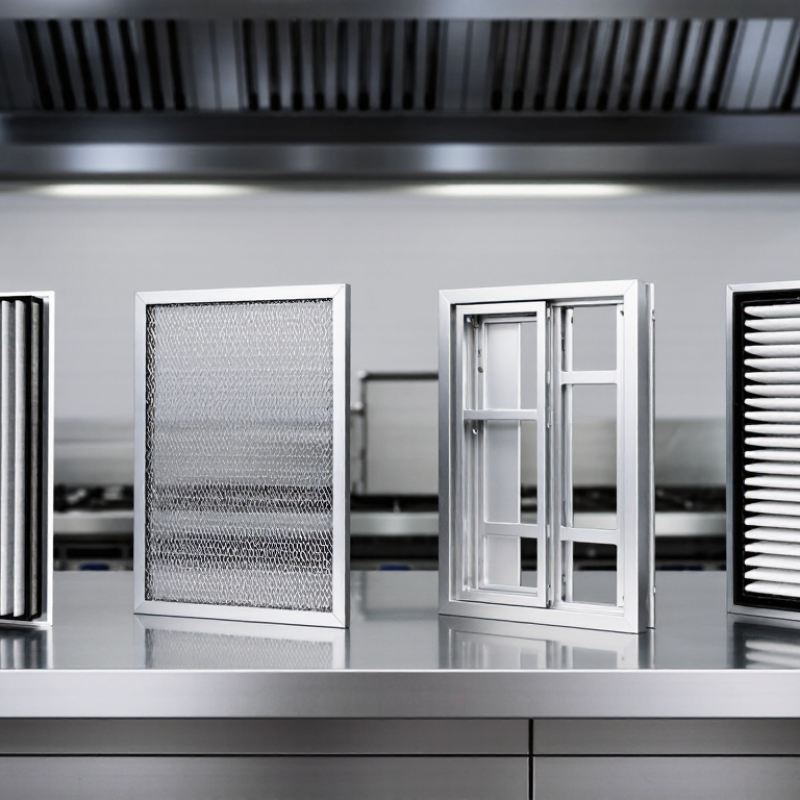
Baffle filters are common in commercial kitchens. Their angled metal plates redirect grease into a collection channel, and the filters can usually be removed for washing. They suit busy ranges, though neglected grease trays can still create a mess. Mesh filters use layers of metal screen to catch grease. They are often lighter, but clogged mesh can restrict airflow, so cleaning frequency matters. Check the hood’s instructions rather than relying on appearance alone.

Activated-carbon filters help reduce cooking odors in ductless or recirculating hoods. They do not replace a grease filter; many systems need both. Carbon media also loses effectiveness and must be replaced, not simply rinsed. Some hoods combine mesh or baffle sections with carbon. The right choice depends on cooking volume, ducting, and maintenance habits. There is no perfect filter.

Filter upkeep supports the whole ventilation system. The U.S. Department of Energy’s commercial kitchen ventilation guidance reports that demand-controlled ventilation can cut exhaust-fan energy use by about 30–50%; that saving concerns airflow controls, not filters alone. Still, a clogged filter can undermine airflow. NFPA 96 also sets requirements for grease-filter installation and access in commercial cooking operations. For a real kitchen, confirm compatibility and cleaning access before choosing. A filter that is effective on paper may be ignored if it is awkward to remove.

What Are the Top Hood Filter Types in 2026? — The Main Hood Filter Types Available in 2026
Filter Type Typical Construction Primary Function Hood Setup Cleaning and Replacement Common Uses
Baffle Filter Interlocking metal baffles, commonly stainless steel; some versions use aluminum. Redirects airflow so grease droplets separate and drain into a collection area. Typically used in ducted range hoods. The filter captures grease; it does not remove cooking odors by itself. Usually removable and washable. Follow the hood and filter maker’s instructions for cleaning frequency and method. Commercial kitchens and residential hoods designed for baffle filters, especially where cooking produces substantial grease.
Mesh Filter Multiple layers of woven or expanded metal mesh, often aluminum or stainless steel. Traps grease as cooking air passes through the mesh. Common in ducted hoods; some recirculating hoods use a mesh grease filter alongside a separate odor filter. Many metal mesh filters are removable and washable. Replace the filter if it is damaged or cannot be cleaned effectively. Residential range hoods and other applications where a lightweight, layered grease filter is specified.
Charcoal (Carbon) Filter Activated carbon held in a pad, cartridge, or other filter format. Reduces cooking odors in air that is returned to the room; it is not a substitute for a grease filter. Used in ductless, recirculating setups, usually together with a grease filter. It is generally not needed when air is exhausted outdoors. Typically replaced rather than washed. Replacement intervals vary with use and the hood’s instructions. Homes where the hood recirculates filtered air instead of venting it outdoors.
Combination Filter System A grease-filter stage, such as metal mesh or a baffle, paired with a separate charcoal filter. Combines grease capture with odor reduction in a recirculating hood. Used in ductless configurations. Each filter stage performs a different task. Clean the washable grease filter as directed; replace the charcoal filter according to the hood’s instructions. Recirculating range hoods that require both grease filtration and odor reduction.
Selection note: Filter compatibility, dimensions, cleaning methods, and replacement intervals depend on the hood design. Check the appliance instructions before choosing or maintaining a filter. Grease filters and odor filters are not interchangeable.

Baffle, Mesh, and Charcoal Filters: Key Differences

What Are the Top Hood Filter Types in 2026?

Baffle, Mesh, and Charcoal Filters: Key Differences

Baffle filters guide rising air through angled metal channels. Grease loses momentum and drains into a collection tray. These sturdy filters suit frequent cooking and stronger ventilation. They are often dishwasher-safe, but check the hood manual. Heavy does not mean maintenance-free.

Mesh filters use overlapping metal layers to catch grease. They are lighter and often less costly than baffle designs. Yet fine mesh can clog faster, especially beside a busy wok or frying pan. Clean it regularly. A neglected mesh filter can restrict airflow and leave residue around the hood. Some filters bend over time, so inspect the frame too.

Charcoal filters target odors in ductless, recirculating hoods. Their porous material adsorbs odor molecules, but it does not replace a grease filter. Most need replacement rather than washing. Timing varies with cooking habits; a lingering smell is a warning, though not a precise gauge. That part is easy to overlook. Choose a filter that fits your hood and cooking routine. No type is perfect, and each needs regular care.

How to Choose a Hood Filter for Your Cooking Setup

What Are the Top Hood Filter Types in 2026?

How to Choose a Hood Filter for Your Cooking Setup

Choose a filter based on how your hood moves air and what you cook. A ducted hood vents air outdoors and usually needs a grease filter, such as a mesh or baffle style. Mesh filters have fine layers that catch grease and are often lightweight. Baffle filters use metal channels to redirect grease into a collection area, which can suit frequent, high-heat cooking. Check your hood’s manual before buying; size and fit matter as much as filter type.

If your hood recirculates air into the kitchen, it may also require a charcoal filter to reduce cooking odors. Charcoal filters do not replace grease filters. They also need periodic replacement, while some grease filters can be washed if the manufacturer allows it. Small kitchens matter. Frying fish several times a week creates different demands than making toast and soup.

Look at your actual routine: how often you fry, whether you use multiple burners, and how much room you have for cleaning or replacements. A filter that is easy to remove may get cleaned more consistently. That sounds obvious, but I have found maintenance plans can be a little optimistic. Check replacement availability and care instructions before settling on a hood or filter.

Filter Care, Replacement, and Performance Considerations

For 2026, common commercial hood filters include baffle, mesh, and cartridge designs. Baffle filters use angled metal vanes to redirect grease into collection channels. Mesh filters trap residue but can load quickly under heavy frying. Cartridge styles vary, so check the equipment documentation before cleaning or replacing one. Small details matter.

Care affects both capture and airflow. Grease buildup raises resistance, which can weaken exhaust performance and make fans work harder. NFPA 96’s cleaning schedule varies with cooking volume: high-volume operations may need quarterly cleaning, while low-volume operations may need annual cleaning. Solid-fuel cooking calls for more frequent attention. These intervals are guidance, not a substitute for local inspection requirements. UL 1046 provides a test standard for commercial cooking grease filters; a filter’s appearance alone does not confirm its performance. Real kitchens are messier than schedules suggest.

Tips: Wash reusable filters with a suitable degreaser, rinse away residue, and let them dry fully before reinstalling. Replace warped, cracked, or poorly fitting filters. Check airflow after cleaning; a loose filter can let grease bypass the hood.

Your browser is out of date!

Update your browser to view this website correctly. Update my browser now

×