What Are the Top Types of PVC Cabinets in 2026?
Choosing cabinets in 2026 means balancing moisture resistance, storage, appearance, and long-term value. Pvc Cabinets are often considered for kitchens, bathrooms, laundry rooms, and other spaces where splashes or humidity are common. Yet “PVC cabinet” can describe different constructions, finishes, and levels of quality. Understanding those differences helps homeowners compare products more carefully.
This guide explores popular types, including wall-mounted, base, tall, modular, and bathroom vanity cabinets. It considers how each design uses space, what its doors and shelves are made from, and which details deserve a closer look. Check panel thickness, edge sealing, hardware, load capacity, and the manufacturer’s care instructions rather than relying on appearance alone. A glossy white door may look crisp in a showroom, while its hinges and internal finish tell a fuller story. No cabinet is perfect. PVC can resist everyday moisture, but construction quality and installation still matter. Some products may also feel less substantial than alternatives, and repair options can vary. The right choice depends on the room, your budget, and how you use the space. This overview offers practical comparison points, not a substitute for verified product specifications or professional installation advice.
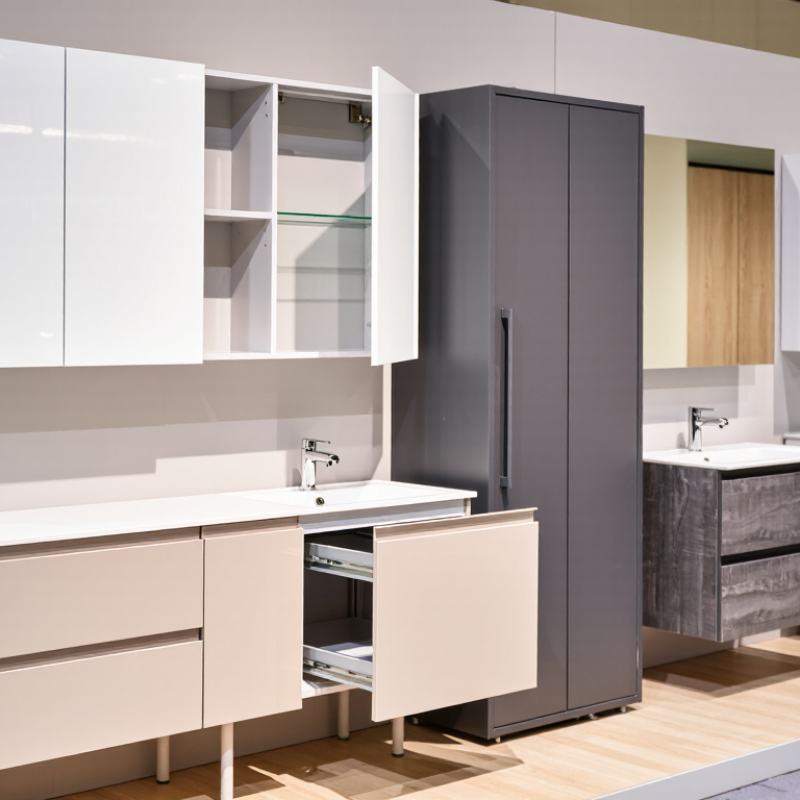
PVC Cabinets: Definition, Construction, and Core Properties
What Are the Top Types of PVC Cabinets in 2026?
PVC Cabinets: Definition, Construction, and Core Properties
PVC cabinets are storage units made with polyvinyl chloride panels or boards. The term covers different constructions, so two cabinets labeled “PVC” may not perform alike. Some use solid PVC sheets; others use lightweight foam boards or PVC-faced panels over a core. Check the panel edges and the inside of a door to see what is actually used.
Construction affects daily use. Panels may be joined with heat welding, adhesives, or mechanical fasteners, while hinges and drawer runners are fitted to the cabinet body. PVC resists moisture better than many untreated wood-based materials, making it useful near sinks. But it is not indestructible. Prolonged heat can deform some boards, and surfaces can scratch or fade under harsh sunlight. Quality also depends on panel thickness, joint finishing, and hardware—not just the PVC label. I would not assume every PVC cabinet is fully waterproof.
Tips: Ask for the board type and thickness, then inspect a sample edge. Look for even seams and sturdy hinge mounting. Keep cabinets away from direct heat, and clean spills promptly. Small details matter. A smooth finish can hide weak joints, so check the construction, too.
What Are the Top Types of PVC Cabinets in 2026? - PVC Cabinets: Definition, Construction, and Core Properties
PVC cabinets use polyvinyl chloride (PVC) as a board material, a surface film, or both. The options below are common construction types; moisture resistance and durability depend on the core, edge sealing, hardware, and installation.
| Cabinet type | Core and construction | Typical surface | Core properties | Main advantages | Considerations | Common applications |
| Solid PVC foam-board cabinets | Cabinet panels are cut from expanded or cellular PVC sheet, then joined and fitted with hardware. | Often a colored board; some panels receive an additional decorative film or coating. | Low water absorption; lightweight compared with many solid wood panels; board stiffness and screw-holding depend on density and thickness. | PVC material does not swell from moisture in the same way as untreated wood-based cores. | Can dent or deflect under load if underspecified; joints and fasteners need suitable design and support. | Bathrooms, utility rooms, and other areas where occasional splashes are likely. |
| PVC-film-wrapped MDF cabinets | MDF doors or panels are shaped and covered with a PVC film, commonly using heat and vacuum pressure. | PVC film can provide smooth, textured, or routed-door finishes. | The film can protect covered faces from routine surface moisture; MDF remains a wood-fiber core. | Allows shaped door profiles and a continuous finish over many edges and contours. | Damaged, lifted, or unsealed film can allow moisture to reach the MDF; prolonged heat may affect adhesion. | Kitchen and bathroom doors where a seamless, shaped finish is desired. |
| PVC-laminated MDF cabinets | Flat MDF panels are faced with a PVC laminate or decorative sheet; exposed edges are typically finished separately. | Flat, decorative PVC face with a range of colors and patterns. | The laminate protects the face, while moisture resistance at cut edges depends on edge banding and sealing. | Suitable for clean, flat-panel designs and consistent decorative surfaces. | Not a solid-PVC construction; damaged faces or poorly sealed edges can expose the MDF core. | Flat-front kitchen, bathroom, and storage cabinetry in dry-to-moderately humid interiors. |
| PVC-laminated plywood cabinets | Plywood panels are faced with a PVC decorative layer; panel edges are covered or sealed as part of fabrication. | PVC-faced decorative surface, usually used on flat panels. | Plywood has cross-laminated wood veneers; resistance to moisture depends on plywood grade, adhesive, face covering, and edge protection. | Can offer a wood-based panel with a decorative PVC face; plywood construction can provide useful panel strength. | PVC facing does not make every plywood core waterproof; exposed edges and joints require protection. | Cabinetry where a faced plywood panel is specified and edges can be properly finished. |
| PVC-faced particleboard cabinets | Particleboard panels are covered with PVC film or laminate; cut edges are commonly banded. | Smooth or patterned PVC decorative face. | The faced surface resists routine spills, but the particleboard core can swell if water reaches unprotected areas. | Provides a flat decorative finish and is commonly used in economical cabinet construction. | Edge sealing and prompt cleanup of standing water are important; repeated wetting can damage the core. | Interior storage and kitchens or bathrooms where panels are kept dry and edges are protected. |
Selection note: “PVC cabinet” does not always mean the entire cabinet is made from PVC. Check the panel core, thickness, edge treatment, hardware fixing method, and the manufacturer’s stated indoor-use limits before comparing options.
PVC Foam Board Cabinets: Structure, Strengths, and Common Uses
PVC foam board cabinets are built from rigid sheets of expanded polyvinyl chloride. The material has a fine, lightweight core between smoother outer faces. Panels are cut and joined to form cabinet sides, shelves, doors, and backs. Edges may be finished with PVC trim or sealed to reduce dirt buildup and moisture entry. The construction is practical, but details matter.
The board resists water better than many wood-based panels, so it is often used in bathrooms, laundry rooms, and kitchens. A damp cloth can usually remove everyday splashes. It also avoids some problems associated with swelling or peeling after minor water exposure. That helps. Still, a cabinet is not automatically waterproof: seams, screw holes, hinges, and wall connections can let water in. Poorly supported shelves may bend under heavy cookware, and prolonged heat can affect the material.
PVC foam board is easy to cut and relatively light to install, which can help in smaller renovations. For a sink cabinet, installers may leave access around plumbing and protect exposed joints. For tall storage, they should check shelf spans and provide suitable reinforcement. One limitation is appearance: some boards look less like natural wood, and surface finishes vary. I would inspect a sample in the room’s actual lighting before choosing; small differences are easy to miss online.
PVC Hollow Board Cabinets: Design, Performance, and Applications
PVC hollow board cabinets use lightweight panels with internal cavities and supporting ribs. This structure can reduce cabinet weight while keeping surfaces easy to wipe. Smooth, matte, or wood-grain finishes suit both compact bathrooms and utility rooms. Water changes the equation. PVC resists moisture better than many wood-based panels, but it is not immune to poor installation.
Performance depends on details. Check board thickness, rib spacing, edge sealing, and hardware before choosing a cabinet. Hinges and screws need secure fixing points; some designs use denser sections or inserts around fasteners. Heavy shelves may need reinforcement, especially when storing detergents or cookware. A cabinet that feels sturdy empty may flex under a concentrated load.
These cabinets work well beneath bathroom sinks, in laundry areas, and in kitchens where splashes are common. They are also practical in rental properties, where quick cleaning matters. For a clean-lined look, flat doors hide the hollow construction; contrasting handles add a useful visual detail. Still, not every room. Direct heat, weak wall anchors, or unsupported spans can shorten service life. Reviewing the installation requirements is as important as comparing colors.
PVC-Laminated Cabinets: Surface Options and Practical Benefits
PVC-laminated cabinets use a decorative PVC film bonded to the cabinet surface. In 2026, common options include matte, high-gloss, wood-grain, and lightly textured finishes. Matte surfaces soften glare and can make fingerprints less noticeable. Gloss reflects light, which may brighten a small kitchen, but it also shows smudges more clearly. Wood-grain patterns add visual warmth without the upkeep of natural timber. Subtle textures can help plain doors feel less flat.
Looks are only half.
The film creates a continuous finish across door fronts and can be wiped clean with a soft, damp cloth. That makes it practical for busy kitchens, where splashes near handles are common. Still, quality depends on the core, bonding, and edge finishing—not just the surface pattern. Repeated heat, standing moisture, or rough cleaning can weaken vulnerable seams. I would not choose from a tiny sample alone; a full-size door shows how the pattern and sheen work in real light.
Tips: Check edges and corners for smooth, even bonding. Ask how the surface handles everyday cleaners, and follow the care instructions. Keep hot appliances from pressing directly against cabinet panels. A finish that looks perfect in a showroom may feel too shiny beside a sunny window.
How to Compare PVC Cabinet Types for Different Spaces and Needs
What Are the Top Types of PVC Cabinets in 2026?
How to Compare PVC Cabinet Types for Different Spaces and Needs
PVC cabinets vary by panel construction, not just appearance. Foam-board PVC is light and resists moisture, making it a practical choice for bathrooms and laundry rooms. However, it can flex under heavy loads, and hinges need secure fixing. Hollow PVC panels are lighter still, but may suit low-load storage better than wide pantry shelves. PVC-wrapped MDF offers a smooth finish and many door styles. Its core needs protection: damaged edges can allow moisture to reach the board.
Tips: Match the cabinet to the room. Check panel thickness, shelf support, hinge fixing, and edge sealing. Near ovens or sunny windows, ask about heat limits; PVC finishes can deform or discolor when exposed to excessive heat.
For kitchens, compare load capacity and hardware before choosing by color. A cabinet holding stacked plates has different demands from a small bathroom vanity. In damp rooms, inspect seams and cutouts around plumbing, where water can collect. “Water-resistant” does not mean every joint stays sealed forever. One easy detail to overlook is repairability: ask whether a scratched door or loose hinge can be replaced without changing the whole unit. That small question can matter more than a glossy sample.
Top PVC Cabinet Types in 2026: Comparing Fit by Space
Compare common PVC cabinet constructions across typical home spaces. Ratings are qualitative guidance based on general material characteristics, not laboratory test results; actual performance depends on board grade, thickness, joinery, and edge sealing.
How to read it: Higher scores indicate a stronger general fit for that space, not a guarantee of waterproofing or durability. Solid PVC foam board is often considered for moisture-prone rooms; PVC-wrapped MDF offers a smooth decorative finish but exposed edges need protection; PVC-faced plywood combines a PVC surface with a plywood core, so sealed edges and installation quality matter.